Mastering Budget Conversations in Construction Sales
Understanding Client Pain Points and Their Impact
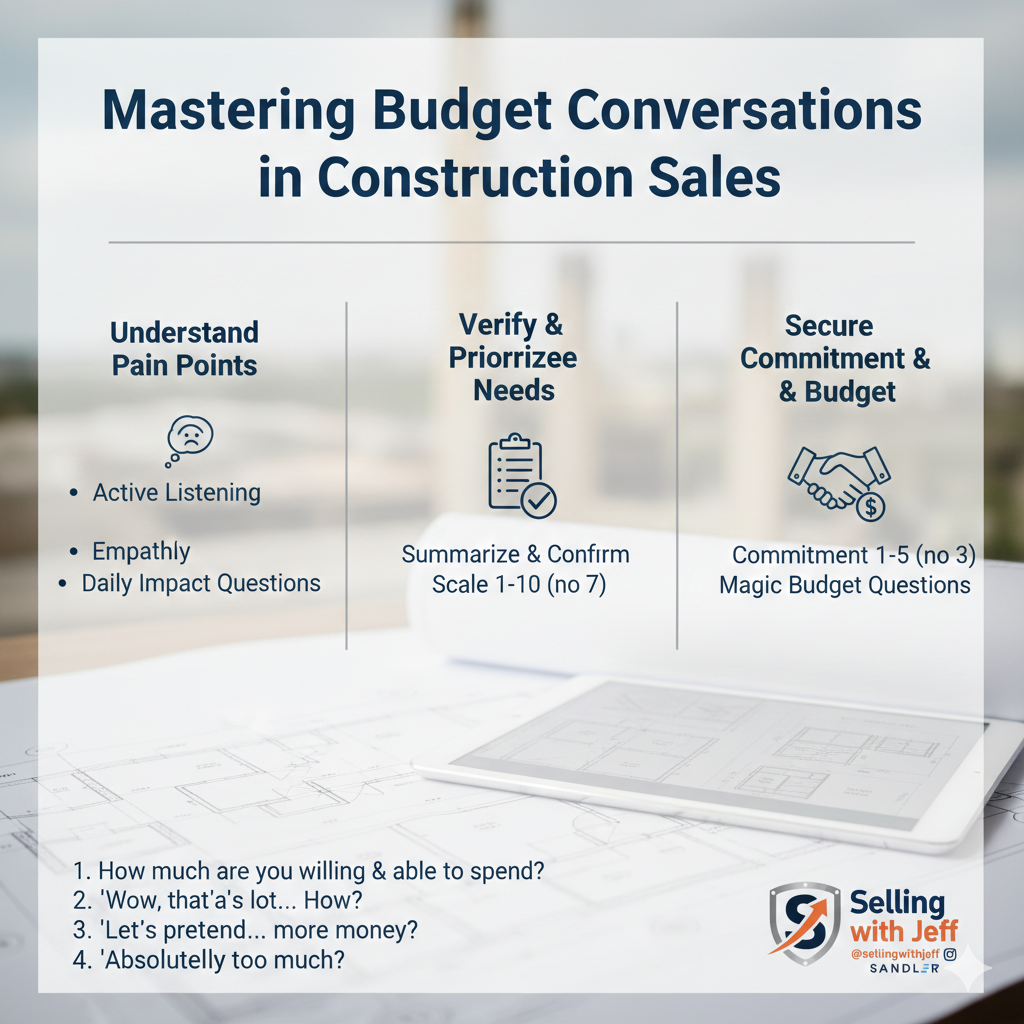
Navigating budget discussions in construction sales starts with a deep understanding of your client's pain points. Pain points are the compelling emotional reasons that drive clients to seek change. In the construction industry, these can range from outdated home designs causing embarrassment to inefficient layouts that disrupt daily life. Identifying these issues requires active listening and empathy, enabling you to connect with your clients on a personal level.
When discussing pain points, it’s essential to delve into the specifics. Ask questions that uncover the root causes and the daily impacts of these problems. For instance, if a client mentions that their kitchen is outdated, probe deeper to understand how this affects their daily routines or social gatherings. This approach not only builds rapport but also lays the groundwork for a more meaningful budget conversation.
The Importance of Verifying and Prioritizing Client Needs
Once you've identified the pain points, the next step is to verify and prioritize these needs. This process ensures that you and your client are on the same page and that their concerns are accurately understood. Summarize the issues they’ve shared and ask for confirmation: “So, you’ve mentioned that the outdated kitchen is causing you embarrassment when hosting guests. Is that correct?”
After verifying, gauge the importance of each pain point. Use a scale of one to ten, excluding seven, to force a decisive answer. For example, “On a scale of one to ten, with one being not important at all and ten being critically important, how crucial is it for you to update your kitchen?” This technique helps in prioritizing the client’s needs and sets the stage for discussing solutions within their budget.
Securing Commitment Before Discussing Budget
Before diving into budget talks, it’s crucial to secure a commitment from your client. This step ensures that they are serious about moving forward with the project. Ask them to rate their commitment on a scale of one to five, excluding three to avoid indecision. For example, “On a scale of one to five, how committed are you to starting this project right now?”
A high commitment level indicates readiness to invest, while a low rating might mean you need to address additional concerns or build more trust. Securing this commitment helps in framing the budget discussion more effectively, as it aligns the client’s willingness to proceed with their financial readiness.
The 'Magic Budget Questions' Technique for Successful Negotiations
When it’s time to discuss the budget, the ‘magic budget questions’ technique can be a game-changer. Start by asking, “Have you thought about how much you’re willing and able to spend on this project?” This question opens up the conversation without putting the client on the defensive.
No matter the number they provide, respond with, “Wow, that’s a lot of money. How did you come up with that figure?” This helps you understand their expectations and the sources of their budget estimates. Next, use the “let’s pretend” scenario: “Let’s pretend that turns out not to be enough to get everything you need, want, and wish for. Where would we find more money?” This question encourages clients to think about additional resources they might tap into.
Finally, ask, “What number should I tell our designers is absolutely too much, that if the project costs more than this, you don’t even want to see it?” This helps establish an upper limit and often leads clients to reveal a higher budget than initially stated.
By following these steps, you can navigate budget discussions with confidence and finesse, ultimately closing deals that satisfy both parties. Mastering these techniques not only builds trust but also ensures successful project outcomes.