Build Trust Fast at the Kitchen Table
How remodelers can build trust fast without sounding salesy
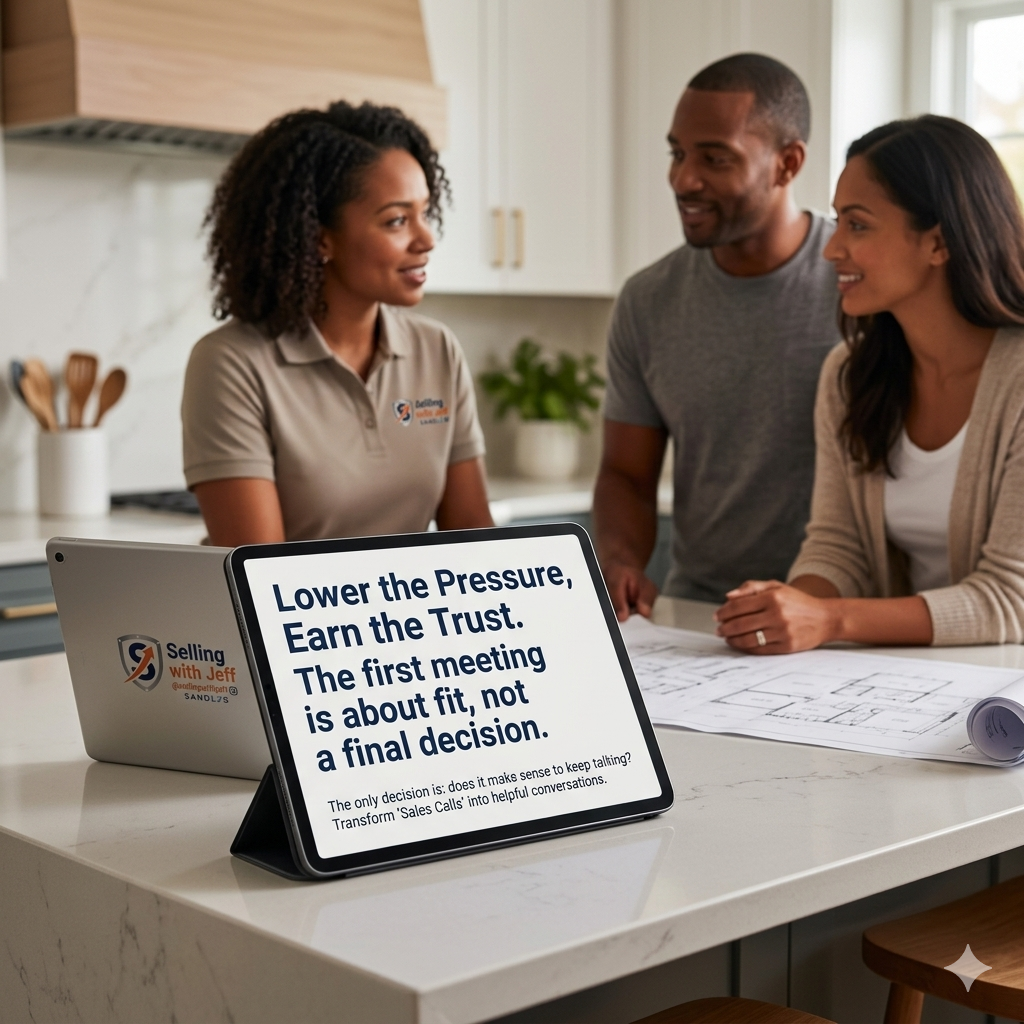
Building trust with remodeling clients starts with lowering pressure and acting like an advisor, not a bidder. Tell homeowners up front that the first meeting is not a decision meeting. The only decision is whether it makes sense to keep talking. That small frame shift calms people and opens real conversation.
Homeowners are about to risk $100,000–$200,000 (or more) on a project they buy only a few times in their lives. You, on the other hand, talk projects every day. If you rush into designs and pricing, you look like “just another contractor.” When you slow down, ask curious questions, and name the small decisions along the way, you stand out.
One national survey Sandler cites found that 79% of buyers say it’s “very important” to work with a salesperson they trust, not just like. For remodelers, that shows up as faster go/no‑go decisions, fewer unpaid design exercises, and less ghosting after you send a proposal.
Use the first call to qualify, lower pressure, and earn a next step
Your first conversation is not about square footage; it’s about fit. Before you drive across town, make a short discovery call. Ask how they found you, what kind of project they’re considering, and what has changed that makes this the right time. You’re looking for interest, realism, and basic alignment.
Instead of asking, “What’s your budget?” on that call (which sounds money hungry), focus on curiosity: “Walk me through what’s not working in the kitchen today.” Then suggest a low‑pressure first visit: “In our first meeting, there’s no decision to make. We’ll just decide if there’s a reason to keep talking. Is that okay?”
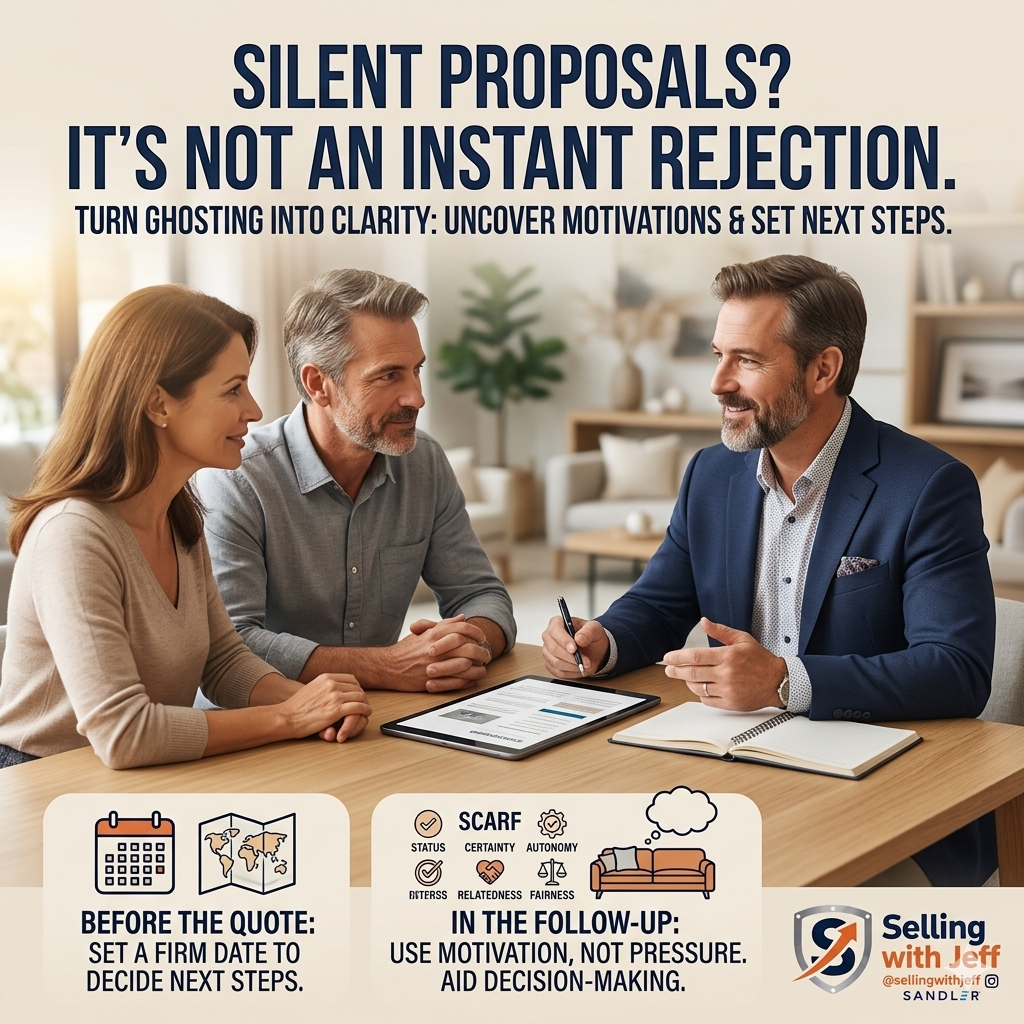
This kind of “up‑front contract” is a Sandler staple because it earns a small, clear decision. For example, one remodeling firm that stopped emailing blind proposals and always booked a follow‑up review meeting saw their close rate on quoted projects jump from roughly 25% to over 40% in a single quarter.
Run Adult-to-Adult conversations instead of reacting to price pressure
Homeowners often show up in “Critical Parent” mode: “Your price is higher than the other bids—why should we pay you more?” If you respond by defending (“We’re worth it!”) or discounting (“Maybe we can sharpen our pencil”), you’ve slipped into the Child role and lost stature.
A better move is Sandler’s Transactional Analysis approach: stay in calm Adult, with a Nurturing tone. For example: “If you can truly get the same project for less, you should. The only reason to keep talking is if something isn’t apples to apples. Would it make sense to walk through the proposals together so you can decide with full information?”
That one script does three things: it respects their intelligence, it protects your price, and it reinforces your real job—helping people make the best decision, even if that decision is “no.” In practice, remodelers who take this Adult‑to‑Adult stance report fewer margin‑killing discounts and more honest conversations about scope.
Adapt your style with DISC so more homeowners say yes
All things being equal, people tend to buy from people they feel are like them. DISC gives you a simple way to flex how you communicate without becoming a different person. The goal is to treat people the way they want to be treated, not the way you prefer to sell.
With a high‑D homeowner (decisive, blunt), cut to the chase: “We can handle design and build under one roof so you have one accountable team. Can I ask three questions to see if we’re a fit?” With a high‑C (detail‑oriented engineer or accountant), bring drawings, specs, and past‑project numbers, then ask, “Where would you like to start: layout, budget ranges, or schedule?”
Sandler’s own article on matching and mirroring notes that only about 7% of communication is words; the rest is tonality and body language. When remodelers slow their pace for S styles, add data for C styles, and keep energy high for I styles, they see more homeowners open up, fewer “we need to think about it” stalls, and a clear edge over competitors who deliver the same canned pitch to everyone.