
Selling with Jeff

Posts by:

Jeff Borovitz

Designers as Budget Stewards: Sandler Selling Without Selling

Why designers are really selling (and why that feels uncomfortable)

Designers sell every day, even if they never present a contract. Sandler sales for designers means guiding decisions, uncovering what really matters, and helping clients trade money for outcomes they care about—without pressure, jargon, or ego. You’re not closing a deal; you’re leading a decision.

Read More

Selling When Dad Pays: Ground Rules for Remodelers

Clarify everyone’s pain before you talk numbers

When a parent or third party is paying for a remodel, selling with multiple decision makers starts with understanding what hurts for each person. That means slowing down long enough to uncover the emotional and practical reasons the parent is involved, instead of assuming they share the kids’ motivations.

Read More

Navigating Trade Pricing, Scope Cuts, and Referrals

How to question big trade price gaps without burning relationships

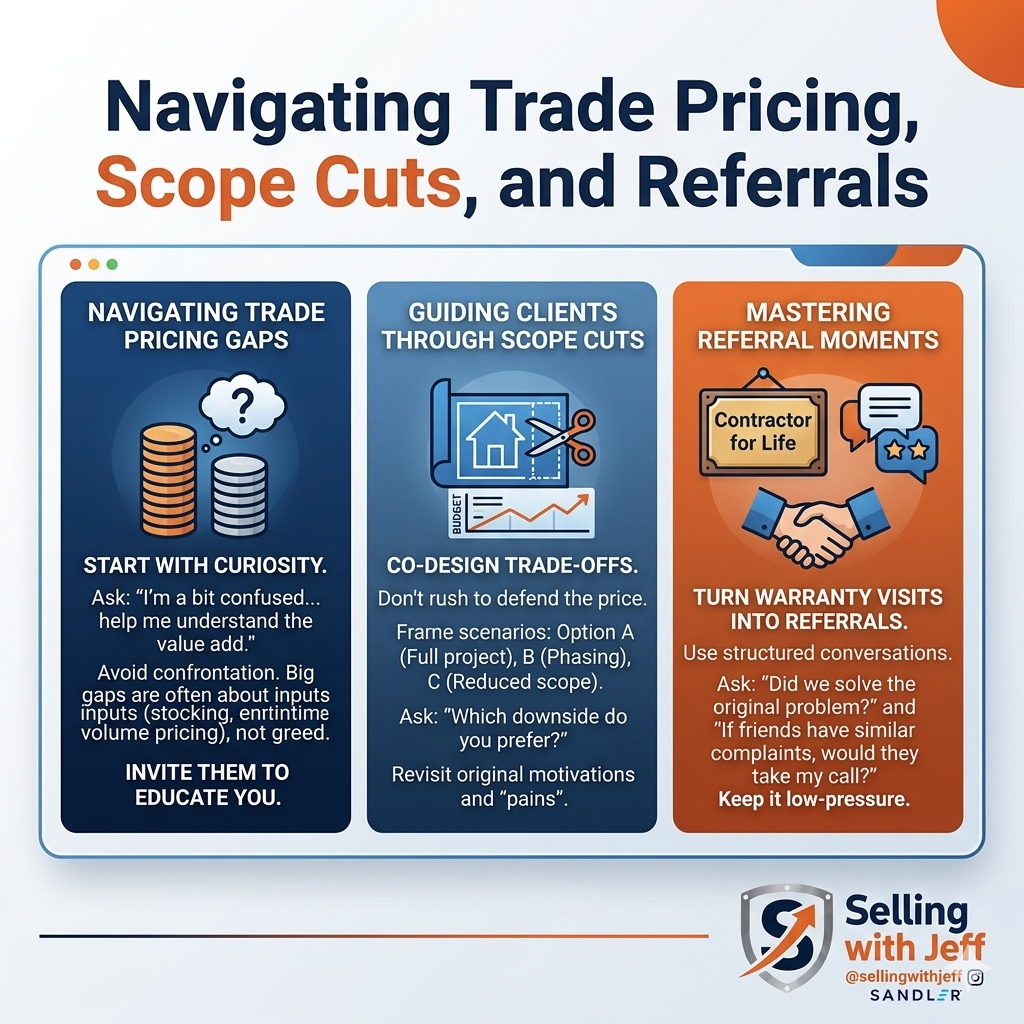
When bids are thousands apart for the same trade scope, start with curiosity—not confrontation. Calmly share that there’s a large gap, ask what might explain it, and invite the higher‑priced trade to help you understand before you ever ask them to sharpen their pencil.

Read More

Advanced Pain and Two-Minute Drill for Remodeler Sales

Clarify every sales call with the two-minute drill

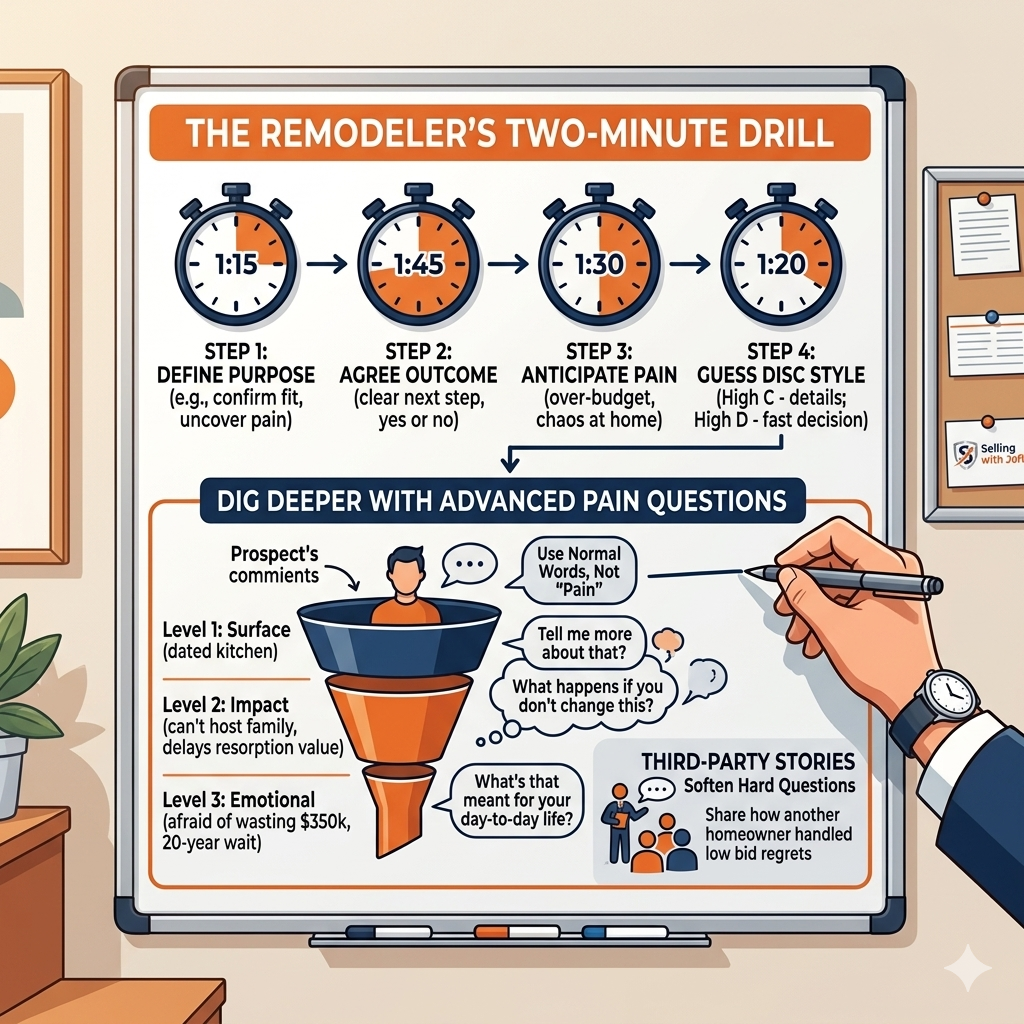
The Sandler two-minute drill is a short pre-call routine where you define the purpose, desired outcome, likely pain, and probable DISC style for the prospect. In less than two minutes, you decide why you’re meeting, what “good” looks like, and how you’ll run the conversation so it ends in a clear yes, no, or next step.

Read More

Advanced Pain Skills for High-End Contractors

Turn rushed site visits into real sales conversations

The advanced pain step is about shifting a meeting from casual project talk to serious business impact. Instead of jumping into square footage and finishes, you slow the prospect down, ask targeted questions, and uncover the emotional and financial risks they’re trying to avoid so price becomes context, not the only deciding factor.

Read More