Selling with Jeff

Posts by:

Jeff Borovitz

Ultimate Upfront Contracts Remodelers Use to Stop Slow Nos

Here’s a cinematic, photorealistic kitchen consultation scene with the blueprints, tablet, and subtle #21245c guidance overlays. If you want, I can al

What an ultimate upfront contract is in remodeling sales

An ultimate upfront contract for remodelers is a short, scripted conversation you run right before a big decision meeting. In 40–60 words, you confirm the homeowner’s pains, budget, and decision process, then agree that the meeting will end in a clear yes, a clean no, or a scheduled next step—never a vague “we’ll think about it.”


Read More

Sales Calls Are Interviews, Not Presentations

Here’s a photorealistic cinematic sales-call scene with a confident professional in a glass-walled conference room, strong diagonal light, and a clean

Shift from ‘selling’ to interviewing: the Sandler mindset

Treating a sales call as an interview means you ask disciplined questions to uncover pain, budget, and fit instead of pitching features or educating. You behave like a calm investigator, not a persuader. The goal is mutual truth: are you genuinely a good match, or should you both walk away and protect your time?

Read More

Remodeler Sales Mindset: Stop Practicing on Clients

Here’s a photorealistic training-studio hero image with the modular indigo practice path, dramatic side lighting, and a diverse sales team in a confid

Why remodelers must stop practicing on their clients

A strong remodeler sales mindset comes from structured practice, not from winging it in front of homeowners. When you rehearse tough money talks, design agreements, and scope resets before the meeting, you protect margin, reduce “think‑it‑overs,” and communicate with confidence instead of hoping the conversation goes well. That’s real remodeler sales mindset in action.

Read More

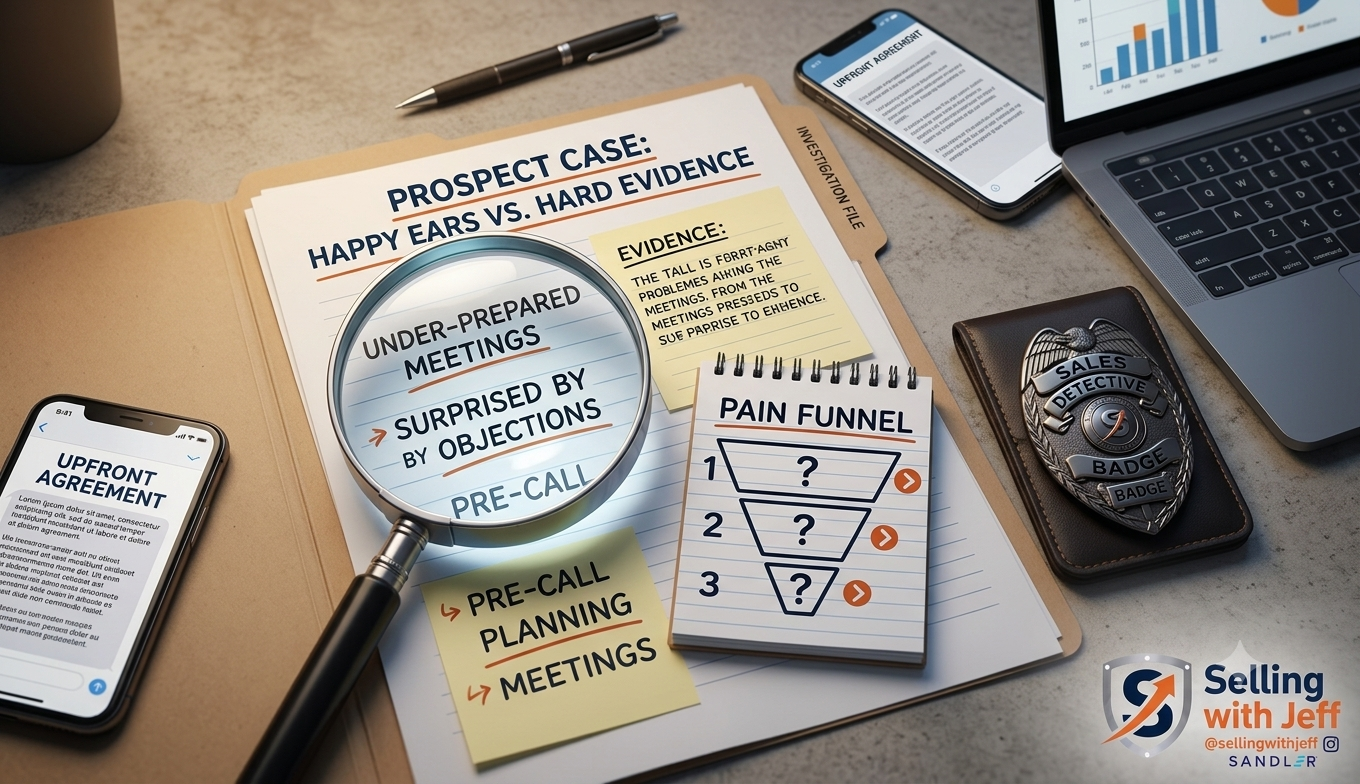
Sales Detective Skills: From Happy Ears to Hard Evidence

Start every sales call like a detective, not a cheerleader

Sales detective skills mean running every call as an investigation, not a performance. Instead of trusting the first thing a prospect says, you treat it as a witness statement: useful, but incomplete. You slow down, ask clarifying questions, and keep following the evidence until you actually understand what’s going on.

Read More