Use DISC, PALO, and “Yes, And” to Build Client Trust
Why DISC matters more than you think in client conversations
DISC communication styles help you see why some client conversations feel effortless and others feel like you’re speaking different languages. When you adjust how you communicate to match their style, you reduce friction, surface the real issues faster, and create the conditions for honest, trust‑based dialogue.
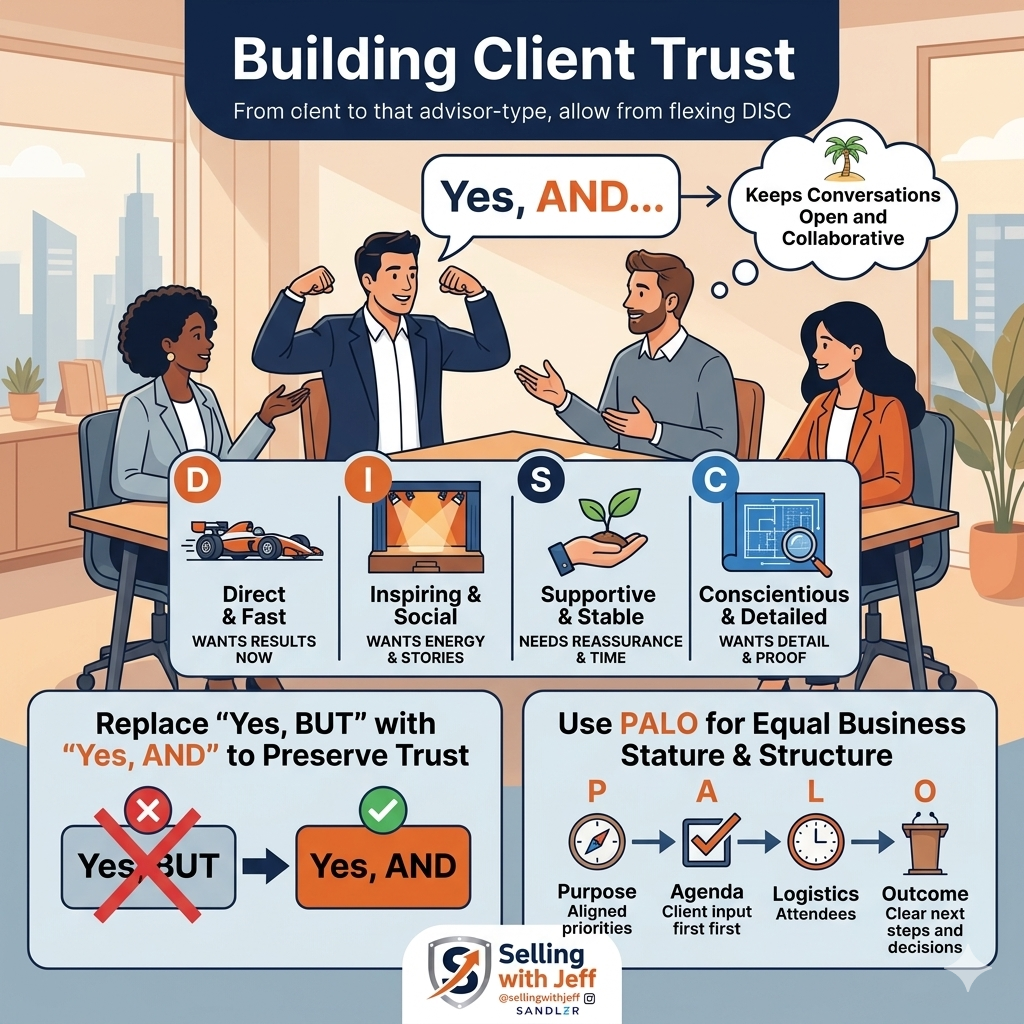
Most post‑sales teams meet this pain point daily: one stakeholder is easy, another constantly misunderstands. DISC gives you a practical lens: a fast‑moving D wants the bottom line and next step; an I wants energy and stories; an S needs reassurance and time; a C wants detail and proof. When you treat everyone the way you like to be treated, you unintentionally miss what they need, and they quietly disengage.
The first step is acceptance. Even if your own assessment feels “wrong,” hand it to a trusted colleague or partner and ask if 80–85% sounds like you. Their feedback usually reveals blind spots. That same gap exists between how your clients see themselves and how they actually behave. Your job is to observe, assess, and recognize their style in real time—tone, pace, questions—and then flex. For example, shortening a deck for a D while sending a detailed follow‑up email for a C respects both without changing your message.
When you consistently flex to others’ preferred style, you signal respect and safety. Research on sales trust shows that buyers who feel understood are far more willing to share real concerns, which shortens cycles and reduces last‑minute surprises. Over time, DISC isn’t a test result; it becomes a shared language for your whole team to debrief calls and plan better next steps.
Replace "yes, but" with "yes, and" to keep trust and momentum
"Yes, and" keeps conversations open and collaborative, while "yes, but" subtly tells the client they’re wrong. Replacing one word prevents defensiveness, preserves trust, and makes it easier to keep difficult requests and constraints on the table without sounding evasive or negative.
In tough moments—feature gaps, delays, roadmap pushbacks—most reps instinctively validate and then say, “but”: “I get why that’s frustrating, but our team can’t commit to that timeline.” The word “but” erases everything before it. The client hears, “You don’t really get it,” and trust you’ve spent months building evaporates in seconds.
Contrast that with: “I get why that’s frustrating, and I want to be transparent about what we can do in this release.” Nothing about the facts changed; the emotional impact did. “And” says, “I heard you, and I’m staying in this with you.” It invites more details, more context, and more co‑ownership of the solution.
Improv actors are trained on this rule because “yes, and” keeps a scene alive. Client conversations work the same way. When a customer pushes for a feature you don’t have, respond: “Yes, and help me understand where that shows up in your workflow so we can look for options together.” You validate, you explore, and you keep the door open.
Start by journaling after calls where you used “but.” How did the client react? Then set a micro‑goal for your next week of meetings: catch and swap three “buts” for “ands” per call. It will feel awkward at first; years of habit don’t disappear overnight. Stick with it. You’ll notice clients staying more engaged through hard news instead of shutting down.
Use PALO to bring structure and equal business stature to meetings
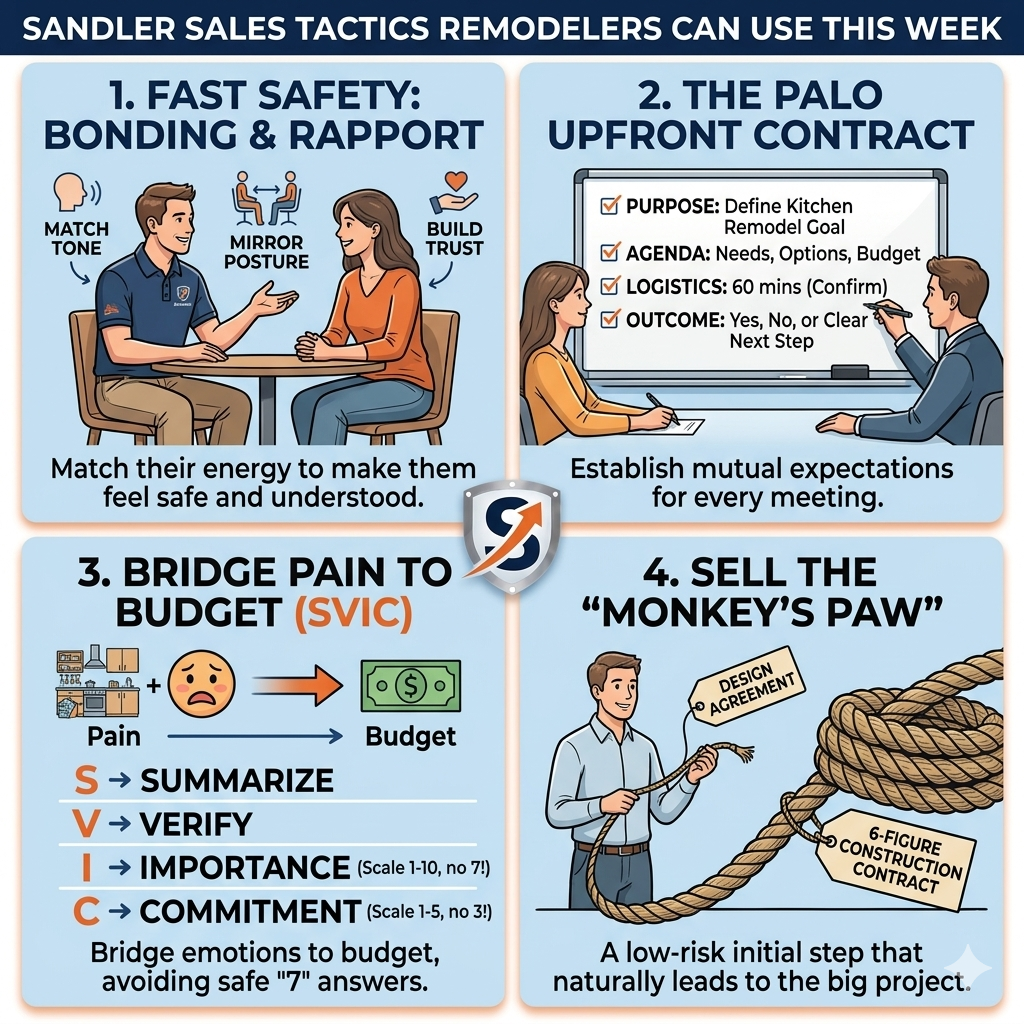
A simple PALO upfront contract—Purpose, Agenda, Logistics, Outcome—prevents surprise, chaos, and “we’ll get back to you” stalls. When you co‑create this structure with the client at the start of every call, you set equal business stature, clarify expectations, and make decisions easier.
Think about the meetings where you expected a decision and got, “Let us think about it and we’ll circle back.” Often the real problem is not resistance; it’s surprise. You never told them what decision you’d ask for, so their safest move is a delay. As one Sandler principle puts it, surprise is the enemy of yes.
PALO fixes this in four quick questions:
- Purpose: “To make sure we’re aligned on priorities for this phase and how we’ll work together. Does that still match what you were expecting from today?”
- Agenda: “What are the top one or two things you want to be sure we cover? … Anything else?” Then share your own agenda items, clearly labeled.
- Logistics: “We have 30 minutes—does that still work? Who else is joining? Is there anything you were expecting to bring or review today?”
- Outcome: “By the end, can we agree on owners for the next steps and put our next check‑in on the calendar?”
Notice that this is a questioning process, not a monologue. When you ask, they talk. You’re signaling, “Your time and priorities matter as much as mine.” That alone shifts you from service vendor to strategic partner. Over time, leaders start expecting this structure; they’ll even notice and miss it when you skip it.
Turn these communication habits into a repeatable post‑sales rhythm
These tools only matter if they show up in your day‑to‑day rhythm: how you prepare, open, and close every client interaction. Build small, repeatable habits so DISC, “yes, and,” and PALO stop being theory and start becoming muscle memory.
Before key calls, spend five minutes on three questions: (1) Based on past interactions, what DISC style does this stakeholder most resemble? (2) Where am I likely to slip into “yes, but” if they push? (3) What’s my draft PALO—especially the outcome I’ll ask for? This pre‑call checklist is quick, but it changes the whole tone of the meeting.
During the call, listen for style clues (pace, detail, emotion), keep a quick tally mark every time you catch yourself saying “and” instead of “but,” and make sure you ask for the client’s agenda before sharing yours. If a stakeholder you truly need is missing, use the outcome step to fix it: “Next time, could we include your ops lead so we can actually decide on X?” That’s how you protect your time and theirs.
Afterward, debrief as a team in simple, objective language: “That sponsor is high C; next time we send data in advance,” or “We didn’t set a clear outcome; that’s why we left with a ‘maybe.’” Capture one lesson per call in a shared log so newer team members inherit the same discipline.
It’s pleasant when clients like you. It’s essential that they trust you. Using DISC to adapt, “yes, and” to keep conversations open, and PALO to bring structure is how you earn that trust on purpose, not by accident.