Sales Hiring Process: Find Hungry, Coachable Reps
Build a sales hiring process that filters for hunger
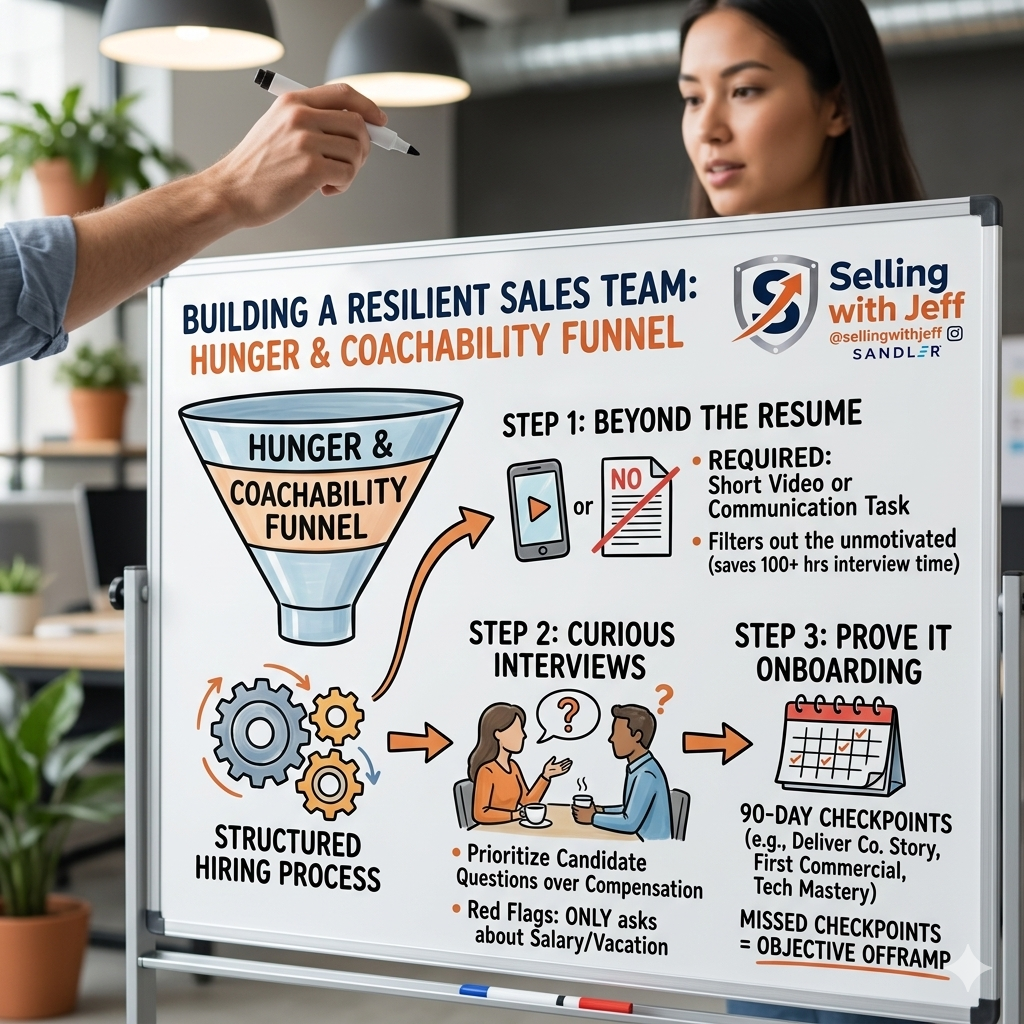
A strong sales hiring process deliberately screens for attitude, curiosity, and hunger before you ever talk about compensation. Instead of reacting to resumes, design a repeatable system that forces candidates to show who they are: how they prepare, how they communicate, and how badly they want to grow over the next five years.
One reason this matters: a bad sales hire can cost 3–5x their total compensation when you factor in lost deals, damaged relationships, and time spent backfilling, according to Intelligent Conversations. That’s especially painful for small construction and remodeling firms where every project manager, designer, or salesperson carries real revenue responsibility.
Take a page from the Banana Ball organization Jeff described. They’ve built a 15,000-person waiting list of people who want to work there—not by making it easy, but by making the first step demanding. Their process is intentionally hard so only caring, different, enthusiastic, fun, growing, hungry people make it through.
Start with screening tasks that show tech and initiative
Your first screen shouldn’t be a resume; it should be a task. Ask candidates for a short video or written exercise that reveals tech comfort, preparation, and personality. Even a simple three‑minute video about why they want to work with you immediately filters out people who won’t follow instructions or won’t push through mild discomfort.
In the Banana Ball example, less than 20% of people on the "I want to work here" list actually submit the required three‑minute video. That self‑selection saves hundreds of hours of interview time and ensures the conversation starts with people willing to do more than click "Easy Apply." For construction or remodeling roles, you might swap the video for a past‑project write‑up, a simple takeoff, or a short Loom walkthrough of how they’d manage a punch list.
The key is that the task mirrors real work: using basic tech, communicating clearly, and meeting a specific constraint (length, time limit, or format). You quickly see who treats your opportunity like a serious tryout versus another casual application.
Use interviews that prioritize candidate questions
Decades of research show structured interviews—same questions, same scoring, same criteria—are roughly 2x more predictive of job performance than unstructured chats, as summarized in Pin’s structured interview guide. But structure isn’t just about what you ask; it’s about what you expect them to ask you.
For sales and project roles, curiosity is non‑negotiable. After a handful of core questions, flip the script: give candidates most of the remaining time to interview you. Someone who comes prepared with thoughtful questions about your clients, process, and expectations is far more likely to navigate complex deals than a candidate who shrugs and says, “No, I think I’ve heard everything.”
Real‑world examples from the call showed candidates disqualifying themselves by either asking only about salary and vacation, or by changing compensation expectations after the offer. A structured conversation plus a heavy emphasis on the candidate’s questions exposes those red flags early, before they’re in front of your clients.
Protect your team with structured onboarding checkpoints
Hiring doesn’t end when they sign the offer; it ends when they consistently perform. Build a 90‑day onboarding plan with clear checkpoints tied to visible behaviors: can they tell your company story, deliver a 30‑second commercial, and execute core tasks independently by specific dates?
One remodeler Jeff mentioned required every new hire—carpenters included—to learn and present the company story to the whole team by the end of week one. Another checkpoint was a simple 30‑second explanation of what the company does and who it serves, because field staff are often the ones neighbors stop in the driveway. When a new designer repeatedly missed these agreed‑upon checkpoints, they ended the trial period and avoided a long, painful mis‑hire.
Think of each missed checkpoint as a red flag. Yellow flags can sometimes turn green with coaching, but truly red flags almost never do. A transparent, written 90‑day plan makes it easier to make objective decisions—and protects your culture, clients, and margins from the wrong hire.