Handling Budget Surprises in High‑End Remodeling Sales

Why budget surprises derail otherwise great remodeling projects
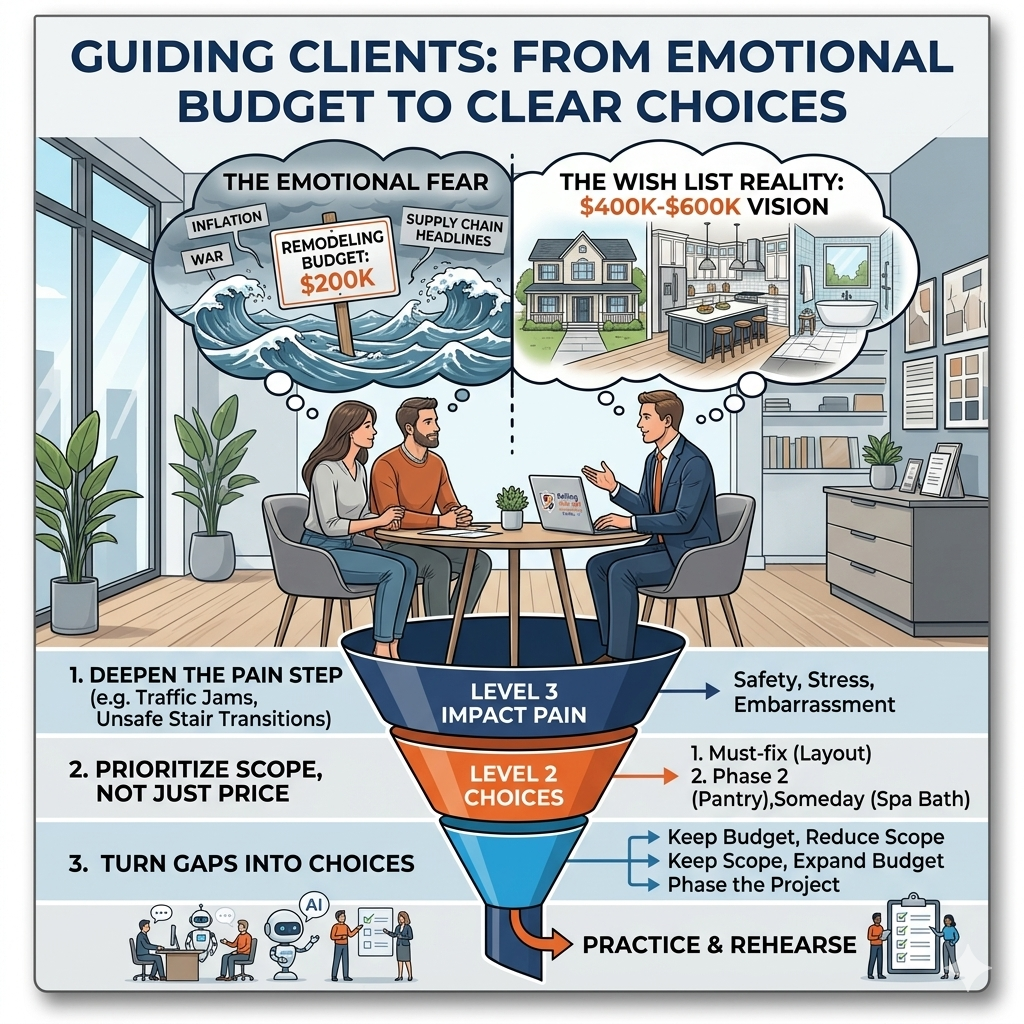
Budget surprises in remodeling sales derail otherwise healthy deals because they trigger emotional reactions—embarrassment, fear, or frustration—long before clients analyze the numbers. When a $100,000 vision prices at $150,000, the issue is rarely math alone; it’s lost control, threatened trust, and anxiety about making a visible, expensive mistake.
In high-end residential work, that emotional risk is amplified. Clients are often successful professionals who are used to being in control and making smart decisions. Research consistently shows that roughly 95% of buying decisions are made emotionally and then justified logically later (Sandler research summary). When they feel blindsided by price, their “child” ego state reacts first: anger, second‑guessing, or retreat. If you respond only with logic—spreadsheets, unit prices, technical explanations—you miss the real problem. The result: stalled decisions, last‑minute cancellations, or clients shopping your hard‑won design with cheaper contractors.
How to use Sandler’s Pain step to defuse money ‘landmines’ early
The fastest way to defuse pricing landmines is to use the Sandler Pain step to uncover the emotional stakes before you draw a line or send a bid. In practice, that means going beyond “What project do you want?” to “Why does this matter enough to invest serious money and disruption right now?”
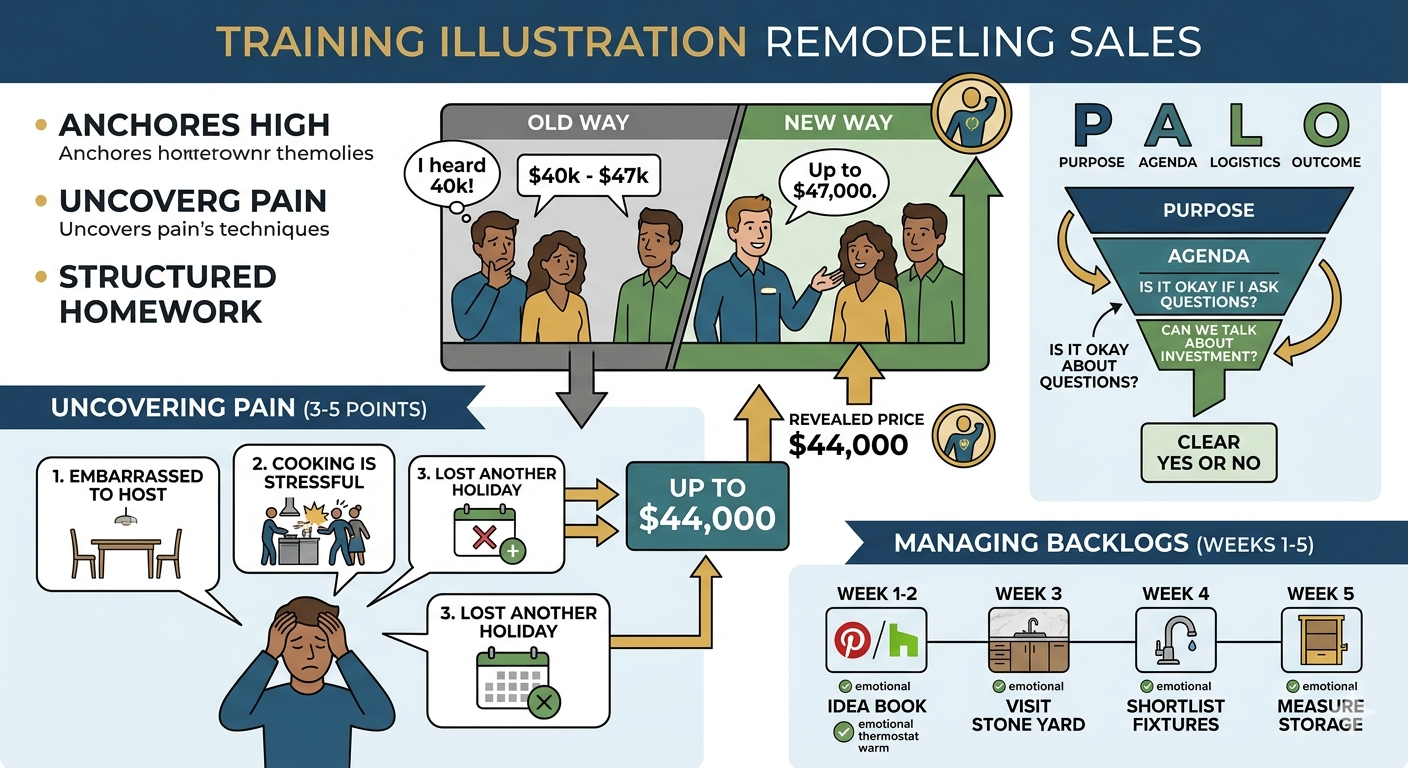
Start with surface pain: “What’s not working with the space today?” Then move into underlying reasons and personal impact: “How is this affecting your family day to day?”, “What happens if you do nothing for the next 3–5 years?” This mirrors the Sandler Pain Funnel described in Sandler’s ‘Qualifying Hard, Closing Easy’ article, where you connect symptoms to concrete costs and emotions. In remodeling, those costs might be constant frustration hosting, safety concerns, or feeling like their home doesn’t match their success. Once that impact is clear, you can introduce budget reality as a continuation of the same conversation instead of a rude surprise. A simple line like, “Sometimes the numbers surprise both of us—if that happens, can we talk frankly about trade‑offs or phasing rather than stopping the project?” sets the stage.
Framing budget resets and options without discounting your price
When the estimate comes in high, your job is not to apologize for the number; it’s to lead a calm, adult‑to‑adult discussion about choices. A useful Sandler mindset here is: qualify hard, close easy. You’ve already agreed on the emotional reasons this project matters. Now you help them decide how to achieve it.
Open with a direct reset: “Good news and bad news. Good news: the design is beautiful and thoroughly priced. Bad news: with the choices we’ve made, we’re at about $145,000 against the $100,000 we first discussed.” Then stop talking and let them react. From there, give structured options instead of random cuts. For example: “If we choose the standard gutters instead of copper, we can save roughly $10–12K and land closer to $132K. We can also look at material substitutions—like cedar instead of Azek—for additional savings.” The key is to adjust scope or specifications, not your margin. This keeps your positioning as a trusted advisor, not a bidder chasing their number. It also aligns with Sandler’s rule of defusing landmines early: you name the overage clearly, then collaborate on solutions instead of hoping it goes unnoticed until contract signing.
Structuring paid pre‑construction and retainers that clients accept
Budget pain doesn’t just show up in pricing; it shows up when prospects walk away at the last second after you’ve invested months in estimating and coordination. The answer for sophisticated contractors is a professional, paid pre‑construction agreement or design‑only engagement with a clear retainer.
Position this as a professional service, distinct from construction, which many jurisdictions allow to be billed differently than deposits for physical work. Explain that the fee covers feasibility walks, trade partner site visits, detailed takeoffs, accurate as‑builts (Matterport or Canvas scans), and a fixed, low‑allowance estimate they can actually rely on. Many successful firms charge either a percentage of the anticipated budget or an hourly structure with a “not‑to‑exceed” cap and a promise to pause and reconfirm if additional time is needed. To screen for commitment, some leaders even require a non‑refundable retainer amount that is credited toward the project once construction starts. This aligns perfectly with Sandler’s decision and budget steps: you’re verifying that the client is serious, emotionally and financially, before you commit your team’s capacity. In practice, the clients who balk at this step are usually the same ones who would have become painful projects—or disappeared days before demo.