
Remodeling Price Objections: Use PAUSE, Not Discounts
Decode “That’s More Than We Expected” With PAUSE
When a remodeling prospect says, “That’s more than we expected,” use the PAUSE price objection framework: pause for five seconds, acknowledge the comment, uncover what they mean, sort which concern you’re hearing, and establish next steps. You diagnose the problem before changing scope, defending price, or discounting.
Here’s the real pain point: you hear that line, your stomach drops, and you start defending your number or offering to “value engineer.” You walk out without a contract and with less respect for your own price. In one coaching review, a rep discounted twice and still lost the job because the couple’s real concern wasn’t money—it was fear of a year‑long nightmare like their neighbor’s project.
Price pushback is normal on six‑figure projects. A RAIN Group study cited by Builder Lead Converter found 82.4% of sales leaders now lose deals to “no decision” and 79.0% cite budget constraints. Your job is not to explain harder; it’s to slow the moment down, run PAUSE, and find out what “more than we expected” actually means.
Spot the Five Doors Behind Every Price Objection
When a client says, “That’s more than we expected,” they’re standing in front of one of five doors:
- Gap – “We can do it, but we pictured a smaller number.”
- Ceiling – “We literally can’t spend that much.”
- Fear – “We’ve seen this go sideways and can’t afford a disaster.”
- Comparison – “Someone else came in lower.”
- Split – One partner is in, the other is quietly out.
In the training story behind this article, a veteran rep showed a $187,400 kitchen. The wife said, “That’s more than we expected,” and he instantly defended cabinets, timelines, and quality. No deal. When he went back and simply asked, “What did you mean by that?” he uncovered Door #3: fear. Their neighbors’ “12‑week” remodel had taken 11 months and blown past $215,000. The objection was about risk, not dollars.
If you guess the door, you sell to the wrong problem. PAUSE forces you to diagnose: you stop, listen, and sort out which door you’re really at before you touch the number.
Run PAUSE in the Room: Questions That Expose the Truth
Each letter in PAUSE is a behavior you can execute on the next call.
P – Pause. Give them five full seconds of silence. Hold eye contact. In one enterprise example shared on a Sandler blog, a buyer complained about price; after 30‑plus seconds of silence, he finally added, “Let me explain what I mean,” and laid out the real issue. The first one to fill the silence usually loses.
A – Acknowledge. You don’t have to agree, but you do have to validate. “That’s fair. A lot of people feel that way when they first see the full number.” Skip the “I understand, but…”—the “but” erases the empathy and throws you back into defense.
U – Uncover. Toss the hot potato back with a calm reverse: “More than you expected how?” or “What number were you picturing?” Research summarized in Handle High-End Remodeling Objections With Questions shows high performers treat objections as opinions to explore, not verdicts to fight.
S – Sort. Their answer tells you the door. “We capped this at $175,000” signals a ceiling; “Our neighbors got a lower bid” is comparison; “He’s excited, I’m nervous” is a split. Name it in your notes.
E – Establish. Close the loop: “Here’s what I suggest. Let’s spend ten minutes together and see if there’s a version of this project that truly makes sense. If there is, great. If not, tell me no.” You’ve just taken back control without a single dollar of discount.
Protect Your Margin With a Real Investment Step
A price objection late in the game usually means you never ran a real budget step in the first place. As outlined in Price Objections: Run a Real Investment Step, Sandler treats money as its own stage—after you’ve run a Pain Funnel, summarized with SVIC, and before you burn design hours.
In one live audit, I reviewed a remodeler doing $9 million a year whose CRM showed $23 million in “90%” opportunities. When we checked, only about $3 million had a next step on the calendar. The rest were wishful thinking—projects where nobody had ever nailed down real pain, real budget, or real decision structure.
PAUSE helps you clean that up in the room. When you hear “more than we expected,” you:
- Confirm whether the project itself is right: “If the number fit, is this the project you’d want?”
- Clarify true ceilings: “Is there a number you’ve promised yourselves not to go past?”
- Separate fear from facts: “Sounds like there might be a story behind that. Do you mind sharing it?”
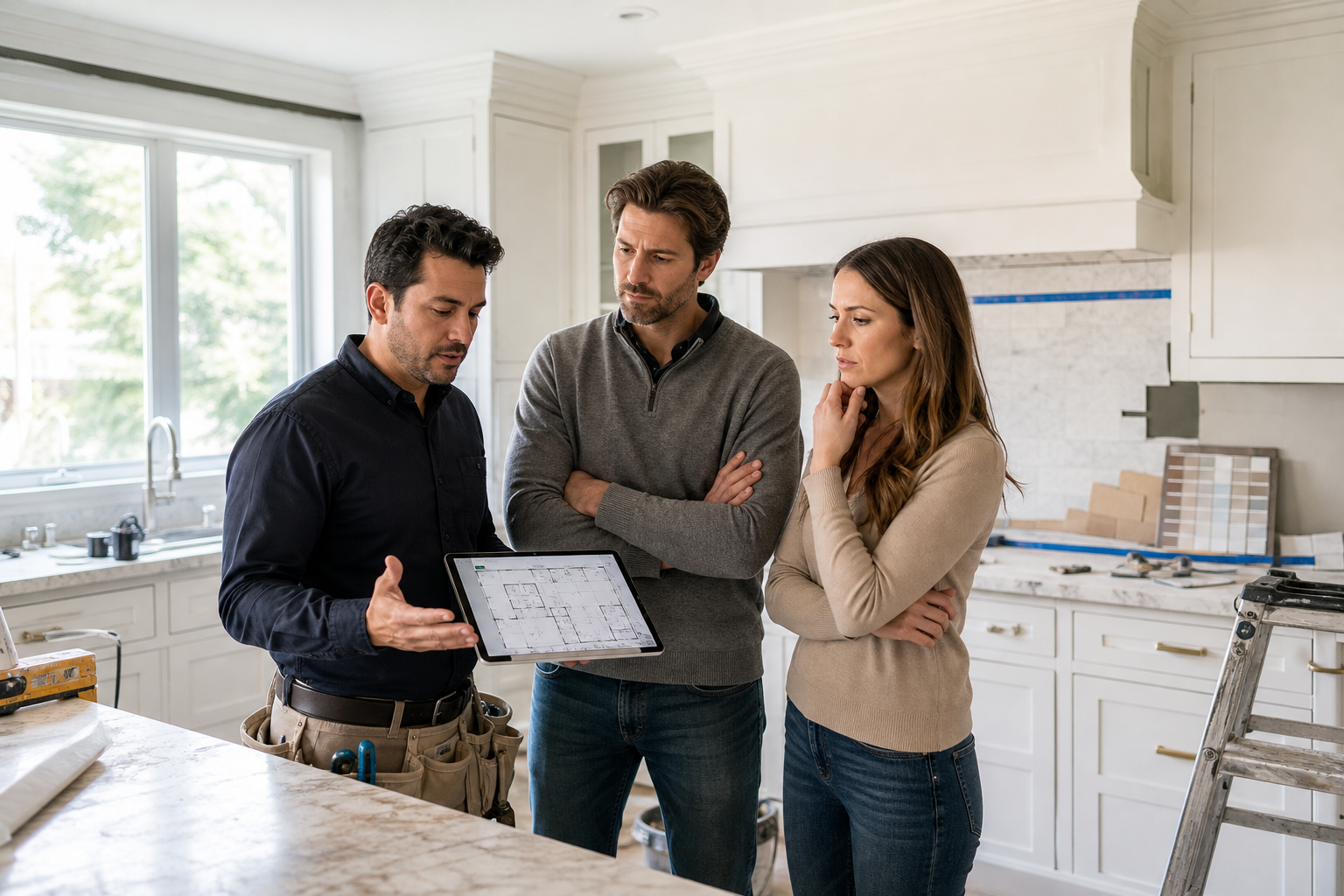
When you combine PAUSE with a disciplined investment step, you stop defending price, stop bloating your pipeline with fantasy deals, and start closing the right clients at the right margin—without flinching every time you turn the iPad around.