Qualifying Custom Home Buyers at Lakefront Lot Events
Start with one question that surfaces the dream
The fastest way to start qualifying custom home buyers at a lot event is to open with one clear, emotional question. Ask how long they’ve been dreaming about living with this kind of view or lifestyle. Their answer reveals whether you’re talking to a true future client or a curious neighbor killing time.
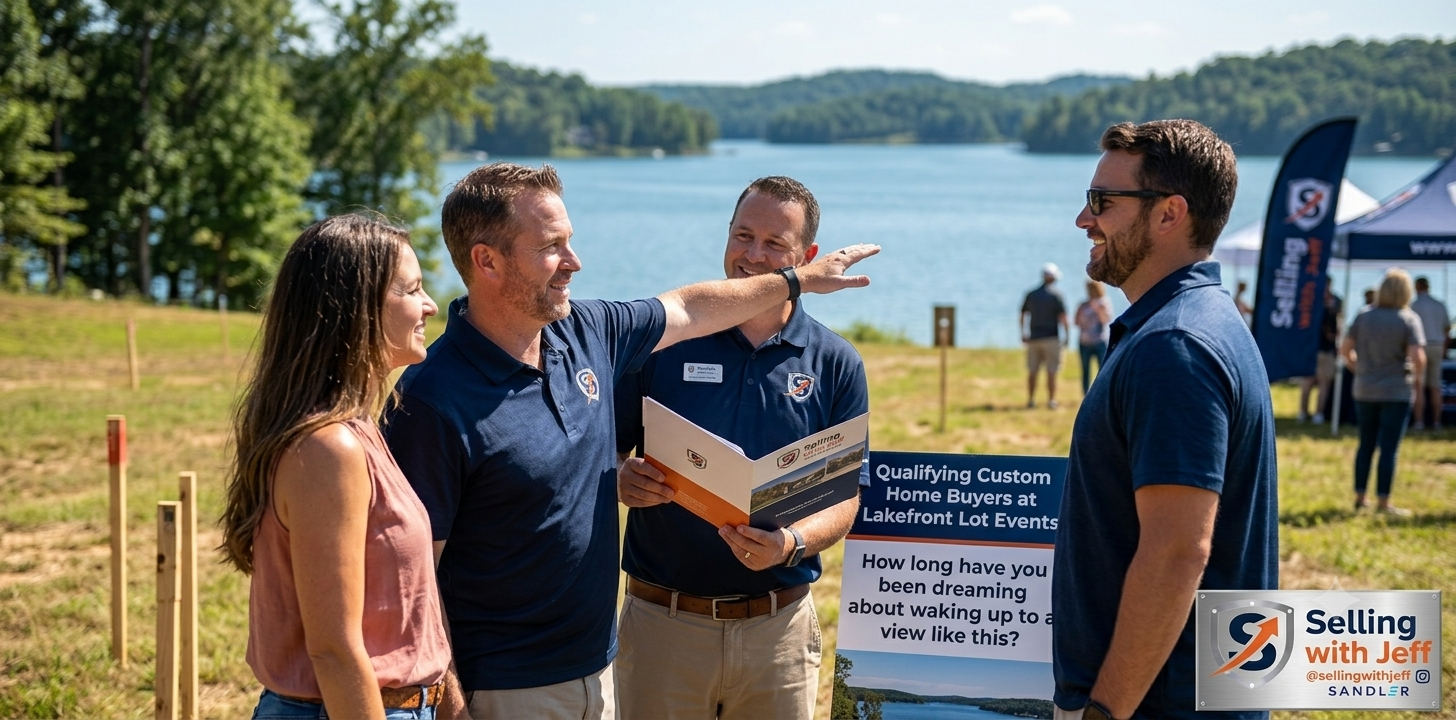
Instead of, “What brings you out today?” try, “How long have you been dreaming about waking up to a view like this?” People visiting a premium lakefront or view subdivision rarely show up by accident. The wording signals that this is about their dream, not your sales pitch, and most serious buyers will happily talk about it.
This question also aligns with broader buyer behavior. A recent survey found that about 43% of Americans would choose a new custom home if money were no object, and that location and scenic views are top priorities (Backyard Garden Lover). When you ask about the dream, you tap directly into the emotional reasons they came.
From there, follow up with simple prompts:
- “What feels most important to you about this location?”
- “Have you thought about whether you’d remodel something existing or build from scratch?”
Short, open questions keep the focus on them while giving you early signals about budget, timeline, and seriousness.
Use green‑yellow‑red signals to qualify fast
Not every person on the lot deserves a one‑hour tour. A simple green‑yellow‑red framework lets you qualify quickly without being rude. Your goal is to decide in a few minutes whether to invest deeply now, nurture later, or politely move on.
Green flag buyers already see custom as the right path. They may say things like, “We remodeled twice and still can’t get what we want,” or, “We’ve looked at resales, but nothing really fits us.” They talk in specifics—number of grandkids, hosting visions, work‑from‑home needs. Those people earn a long conversation and a push to book a follow‑up.
Yellow flag buyers are still debating custom vs. existing homes. Ask, “What makes a custom home more appealing than buying something already built?” If they say, “We’re not sure yet,” you’ve got education to do, but there’s potential. This is where you share just enough about process, cost structure, and timelines to help them clarify.
Red flag visitors are “looky‑loos.” They might admit they already built a custom home nearby, or they’re only comparing views. You can still be gracious—answer a few questions, hand them a brochure—but avoid spending your prime event hours here.
This discipline matters. One agency study noted that custom home qualification involves months‑long timelines and project values often exceeding $500,000, so chasing unqualified interest is expensive time (The Diamond Group).
Tell the build story instead of pitching features
Once you’ve identified a green or strong yellow, shift from interrogation to education. Walk them through the experience of building with you—from empty lot to move‑in—using photos or posters instead of a dense process speech.
Set up a simple visual sequence at your booth:
- Empty lot with stakes in the ground.
- Framing and roof going on.
- Drywall and rough‑ins.
- Cabinets, finishes, and a furnished shot.
- A final image from the patio, looking at the lake or view.
As you walk them past each image, narrate what it feels like for clients at that stage: first shovel in the ground, watching the shell go up, seeing their kitchen finally take shape. Tie each step back to how your process protects them—clear change‑order rules, dedicated project management, regular site meetings—without drowning them in jargon.
This story approach lines up with what broader housing research shows: buyers obsess over location, neighborhood quality, and day‑to‑day life in the home, not just specs. In one 2026 analysis, 59% of buyers cited neighborhood quality as a top factor in their decision (Local Logic). Your story helps them imagine their life in that specific place, not just your square footage.
End every lot visit with a clear next step
A great conversation that dies at “Thanks for stopping by” wastes the whole event. Before you launch into questions, quietly get permission to suggest a next step: “If this ends up feeling like a good fit, would it be okay if we talked about a short design or planning meeting?” That primes them for a clear close.
With green‑flag visitors, aim for a concrete commitment on the spot: “Do you have your calendar handy? Let’s grab 30 minutes next week to talk through budget ranges and timing.” They already told you how long they’ve been dreaming about this; now you’re simply helping them act on it.
Yellow‑flag visitors might not be ready for a full design consult, but you can still move them forward. Offer to send a short video that shows your build process and includes a link to schedule a deeper conversation. This keeps you in control of the follow‑up instead of handing them a brochure and hoping.
Even with red‑flag visitors, get an email and tag them for a long‑term nurture sequence. In markets where custom builds often sit above the median price and demand swings with the economy, some “just looking” visitors today will be real buyers in a few years. A short, consistent follow‑up system turns a one‑day event into a predictable future pipeline.