Predict, Don’t Persuade: Sandler Pre‑Call Planning
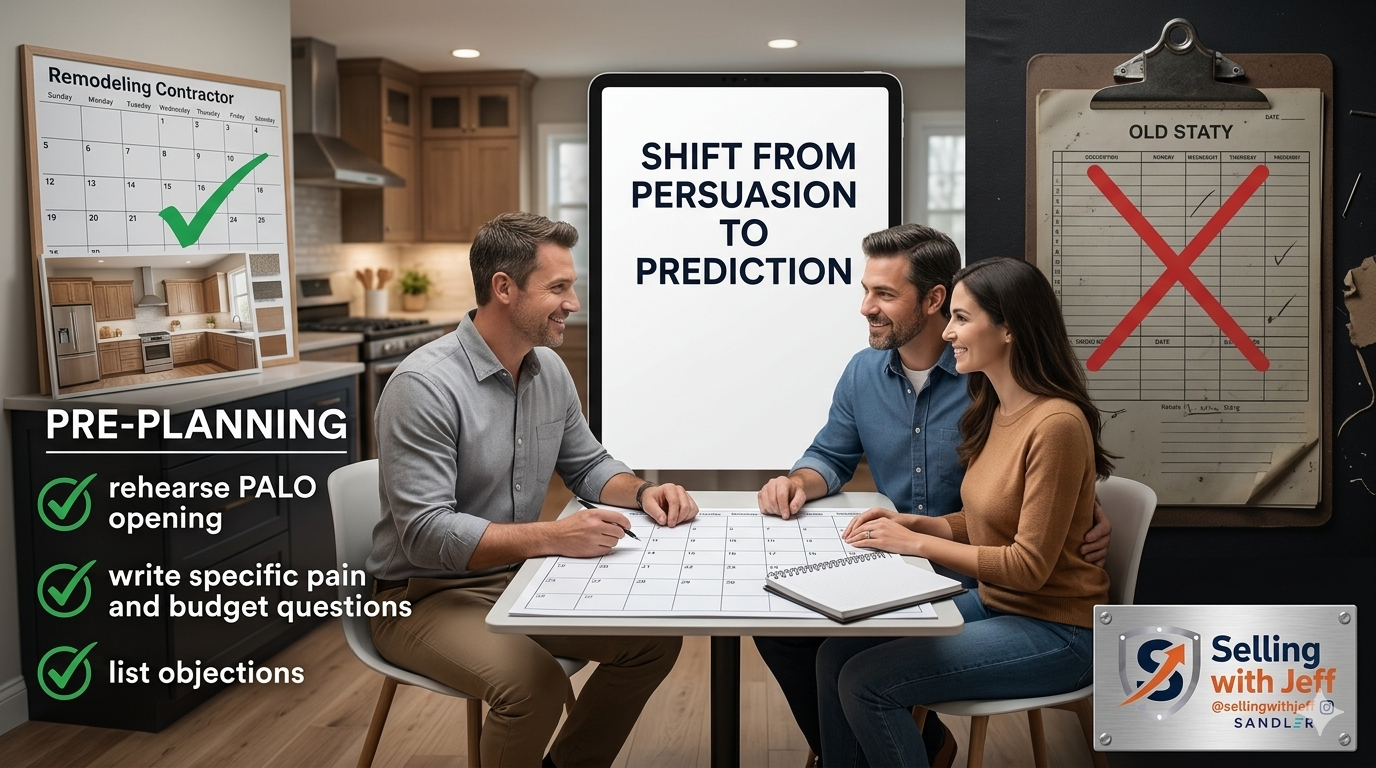
Shift from persuasion to prediction in remodeling sales
In remodeling sales, Sandler pre-call planning and upfront contracts shift your job from convincing people to predicting who will actually become a client. Instead of pushing every prospect forward, you use structured conversations to learn their pain, budget, and intentions before you invest serious time.
Most contractors were taught the opposite. You drive across town, walk the house with a clipboard, throw out a "spaghetti on the wall" estimate, and hope the client chooses you. That hope strategy leads to unpaid design work, bloated pipelines, and thin closing rates.
Sandler flips that script. Your primary role is to qualify, not to educate for free. You ask questions that uncover why they’re talking to you now, what problems they’re trying to solve, and what they plan to do if your proposal looks good. In one famous Sandler story, a seller tests a budget by asking how the prospect would react if the real number were almost double; the prospect’s honest “I’d kick you out of my office” response saves everyone hours.
Research backs this approach. Gong’s analysis of hundreds of thousands of sales calls found that deals where reps set clear next steps are significantly more likely to close than deals without them, because clear agreements expose real intent early (Gong). Prediction over persuasion protects your time and your margins.
Build a CAPPS ideal client profile that filters time‑wasters
CAPPS is a practical way to predict which remodeling leads deserve your calendar. It stands for Characteristics, Alternatives, Problems, and Signs/Symptoms. Used well, it becomes an ideal client filter you can teach to your whole team, including whoever answers the phone.
Characteristics are the demographics of a solid client: location, home type, income range, or project size. For example, one design–build firm defined its sweet spot as projects between $250k and $1M within a 30‑minute drive; anything outside those bounds was rarely profitable.
Alternatives tells you what else they’ve tried. A homeowner who has toured every resale house in town and found nothing acceptable has already rejected a key alternative, making your remodel far more likely. By contrast, a prospect “just getting ideas” from three architects and four contractors is waving a risk flag.
Problems are the pains you’re uniquely good at fixing: permitting nightmares, steep slopes, floodplain lots, or complex additions. A builder who routinely wrestles difficult hillside foundations should listen for horror stories about failed engineering—those pains are strong buying signals.
Signs and Symptoms are the early smoke signals: they already own the land, can articulate a realistic budget range, know roughly when they want to move in, and are willing to speak with your preferred lender or realtor. One remodeling coach found that prospects who answered five specific intake questions (address, tenure in home, budget range, prior remodel experience, and timeline) were more than twice as likely to sign than those who dodged basics.
Use PALO upfront contracts to run tighter sales meetings
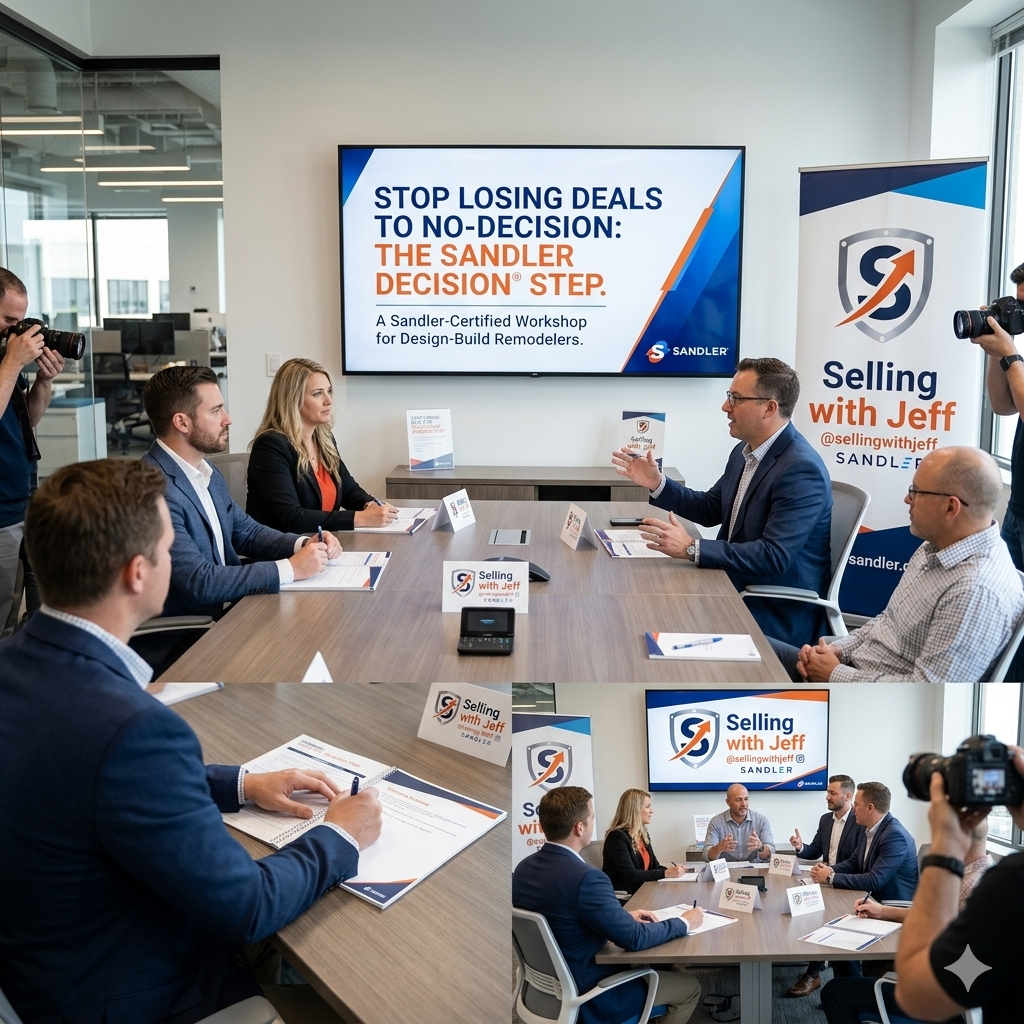
PALO (Purpose, Agenda, Logistics, Outcome) is a simple structure for opening every sales conversation with an upfront contract. It turns wandering, “let’s just talk” meetings into focused business discussions where both sides know why they’re there and what will happen next.
Purpose clarifies why you’re meeting now. For a design–build consult, that might sound like: “The purpose today is to see whether there’s a fit between your project and how we work, and to decide if it makes sense to move to a paid pre-construction agreement.”
Agenda means getting their topics on the table, not just yours. Instead of, “What do you want to get out of today?” (which invites vague answers), try: “What burning questions or concerns do you want to be sure we cover while we’re together?” If they shrug, offer multiple choice: timing, budget, how you handle trades, insurance, past projects. Giving options usually triggers specific, pain-rich responses.
Logistics sets expectations about time and mechanics: who’s attending, when the call ends, whether you’ll be walking the site, and what happens if you’re running behind. Contractors who consistently state a hard stop and stick to it train both team and clients to respect boundaries.
Outcome is a decision or commitment, not “we’ll think about it.” You might say, “By the end, can we agree to decide together whether we move forward to paid pre-construction, schedule a follow-up, or decide it’s not a fit?” In a Sandler-style study of call outcomes, meetings that ended with a clear yes/no/next-step decision shortened sales cycles and reduced “ghosting” dramatically (Sandler).
Six-step pre-call planning you can apply this week
Pre-call planning is where prediction gets real. Before every discovery call or site visit, take ten minutes to walk through six steps so you’re not improvising under pressure or forgetting critical questions once the client is in front of you.
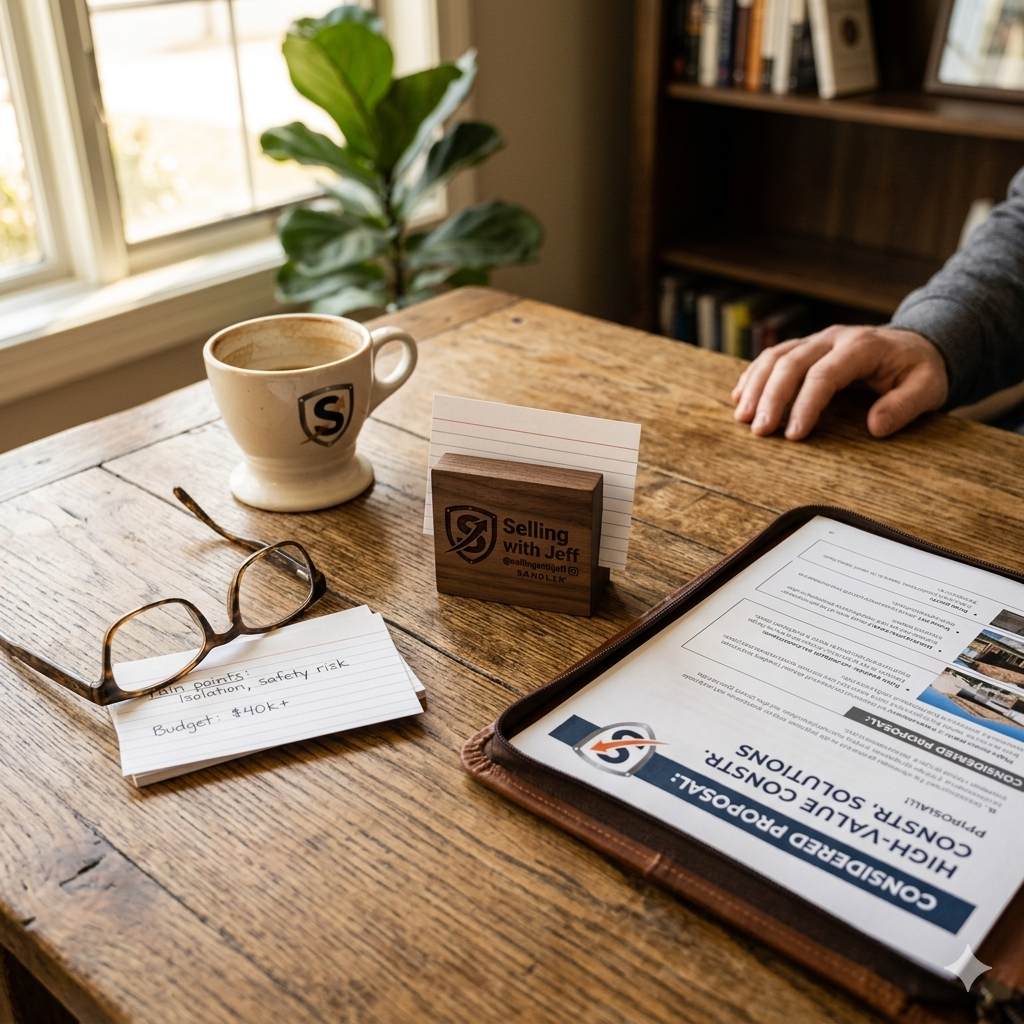
First, rehearse your opening PALO out loud. Second, write down the specific questions you must ask about pain, budget, decision process, and fit. Many remodelers keep a one-page checklist or index card in every job folder; they glance at it on the driveway before walking to the door.
Third, list the objections you’re likely to hear—“we’re talking to other contractors,” “we want free detailed numbers first,” “we don’t know our budget”—and decide in advance how you’ll respond. Fourth, step into the homeowner’s shoes: if they’ve never built before and are nervous about being sold, how can you lower pressure while still asking direct questions?
Fifth, plan your closing PALO as if they say yes. Know exactly what the next step is: a paid pre-construction agreement, design retainer, or a follow-up budget review. Sixth, tune your mindset with one or two supportive beliefs, like “My job is to find out if we’re a mutual fit, not to persuade everyone to buy.”
Contractors who adopt this six-step routine report immediate gains. One firm that started doing structured pre-call planning on every consult saw its close rate on qualified design–build projects rise from roughly 25% to over 40% within a quarter, while cutting the number of unpaid estimates they produced.