Selling with Jeff

Stop Losing Deals to No Decision

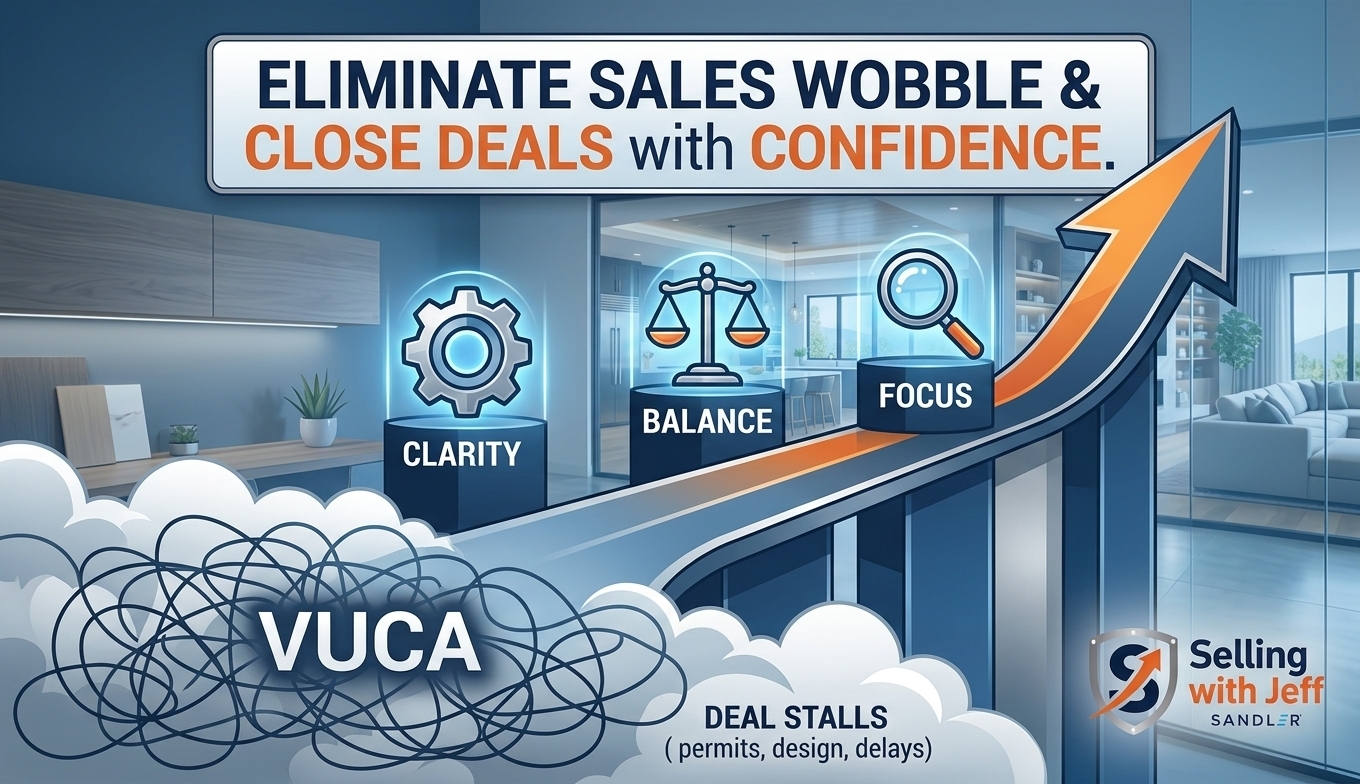
Why deals stall at the decision step

Most stalled opportunities don’t die on price or product; they die in the sales decision process. When reps don’t know who decides, how they decide, and when, deals drift into "no decision." Fixing this means treating decision clarity as a hard qualification gate, not a nice‑to‑have.

Read More

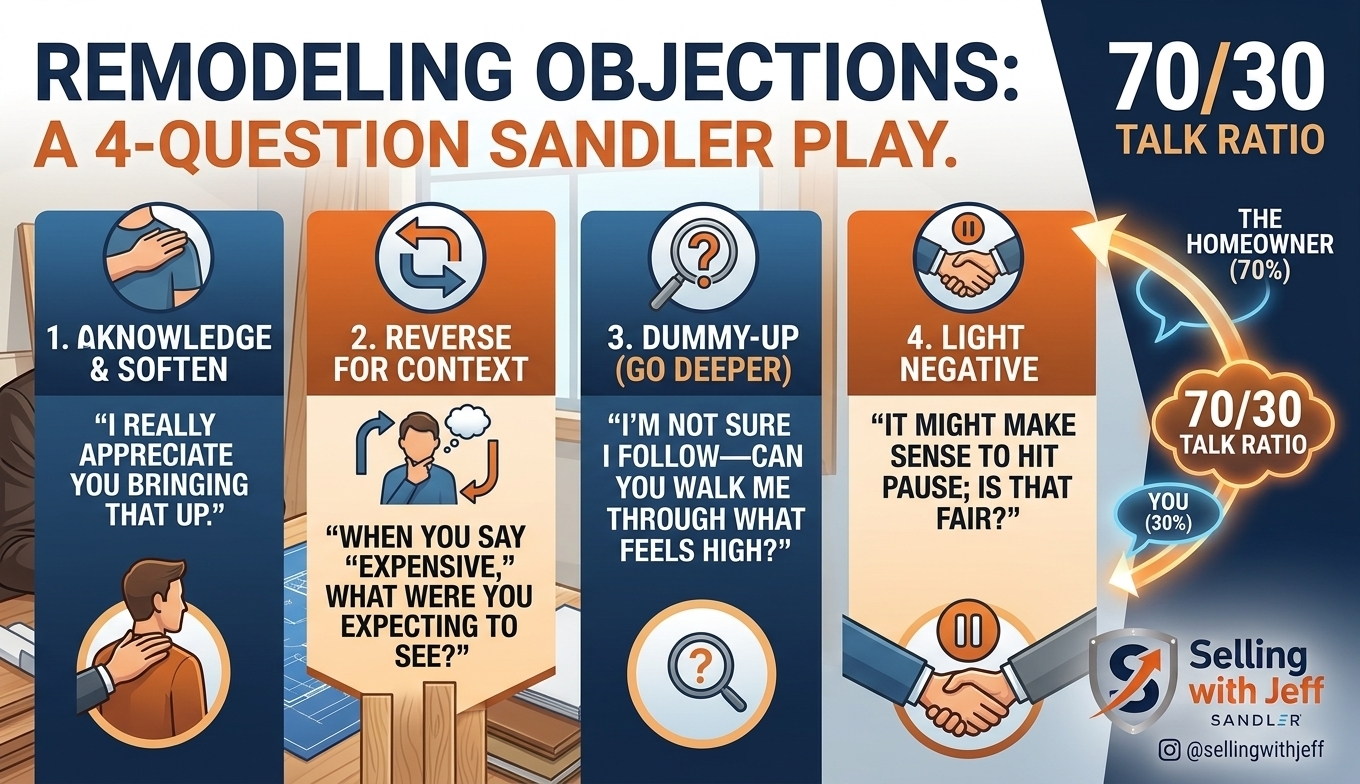
Stop Getting Shopped: How Remodelers Win With Criteria

Why remodel deals stall when homeowners ‘do their due diligence’

When homeowners say they want multiple bids for due diligence, they’re usually not price-shopping as much as they’re risk-managing. The project feels huge, their parents or friends are in their ear, and they don’t have a clear decision process, so they default to “get three quotes and see.” That stalls deals and turns you into a commodity.

Read More

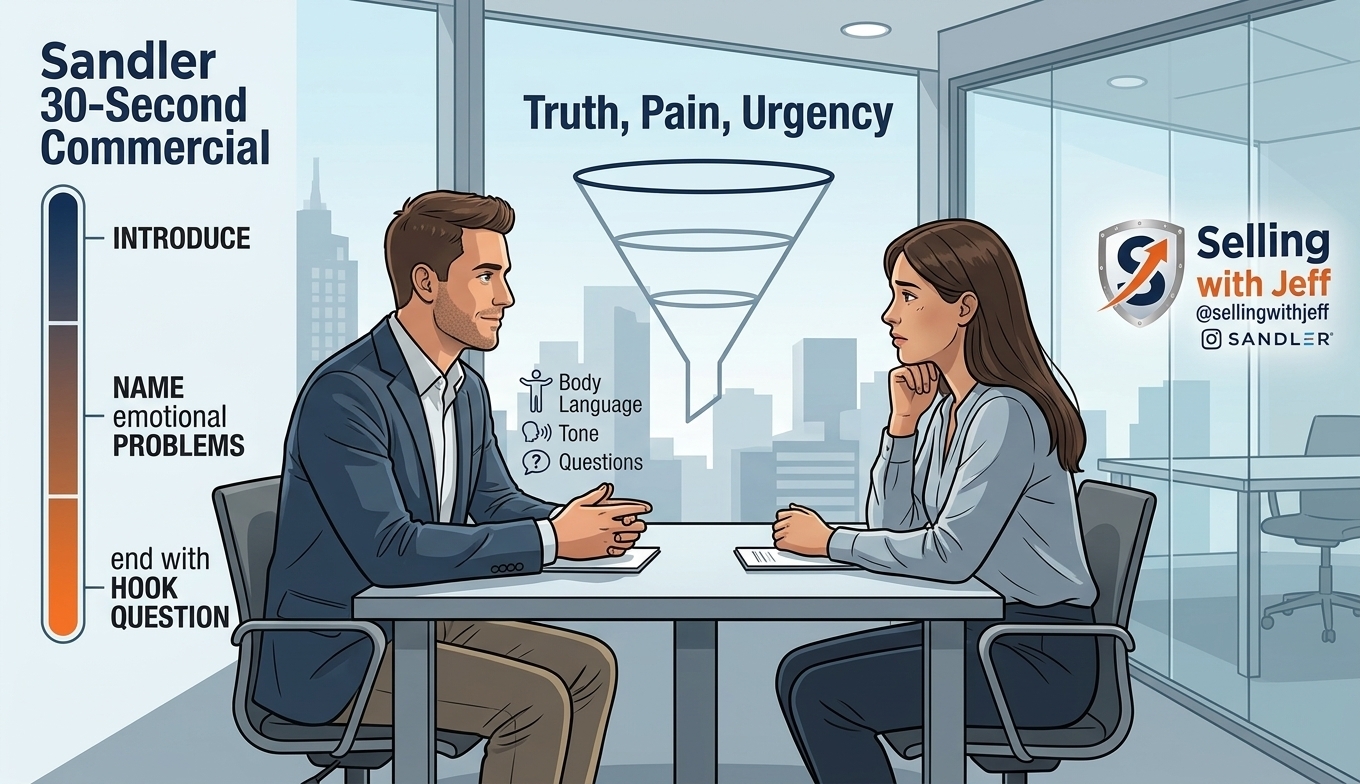
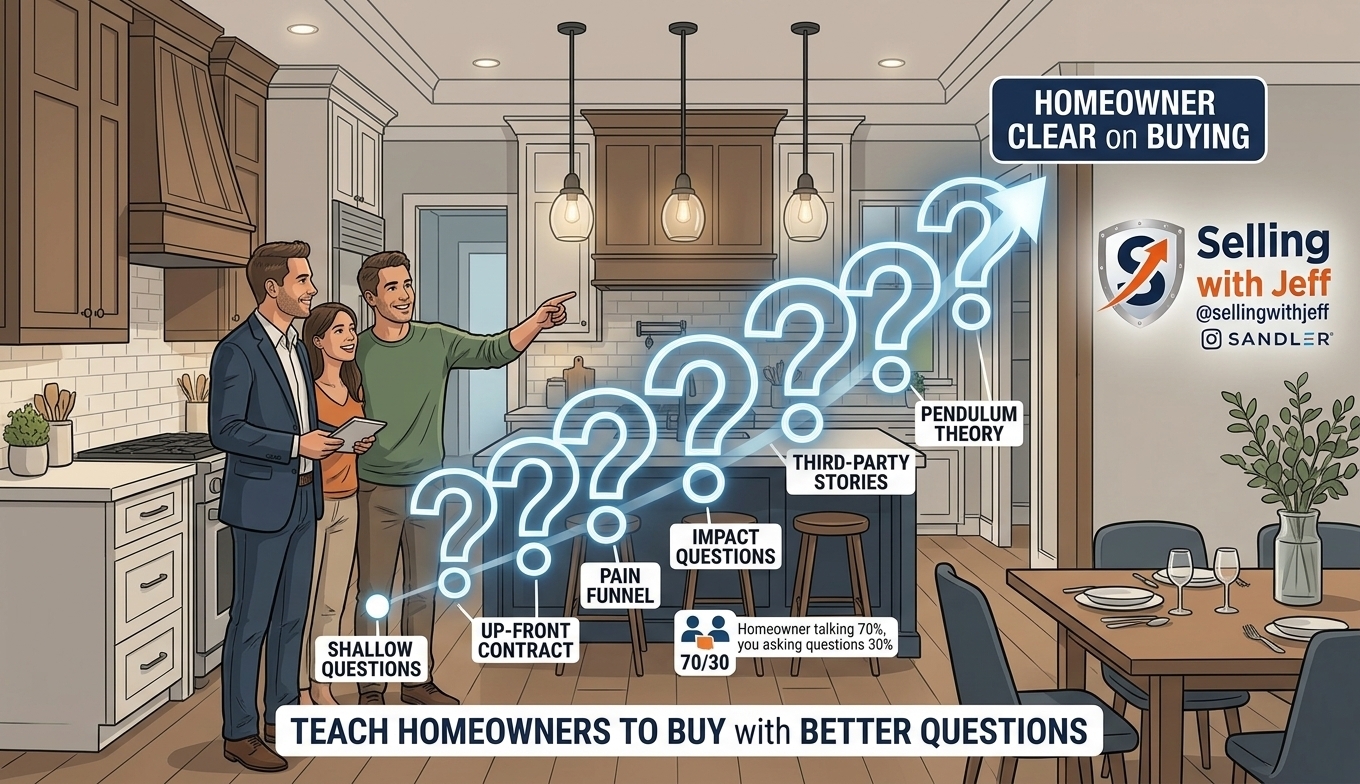
Use the Sandler Pain Funnel to Win More Remodel Deals

Why remodelers need the Sandler pain funnel now

The Sandler pain funnel is a structured sequence of questions that helps remodelers uncover a homeowner’s real emotional and financial concerns so they can decide if they should change, change now, and change with you. Used correctly, it shortens cycles, improves close rates, and keeps you out of price-only comparisons.

Read More

Upfront Contracts for Remodelers: Fix Broken Sales Calls

Why Remodeling Sales Calls Go Sideways Without an Upfront Contract

A strong upfront contract is a short, mutual agreement about purpose, agenda, logistics, and outcomes of a meeting. In 40–60 words, it defines why you’re there, what everyone will cover, how long you’ll talk, who needs to be involved, and what decision you’ll make together so the call ends with clarity instead of confusion.

Read More

Sales Fulfillment Step: How Remodelers Build Trust

What a tight fulfillment step looks like in remodeling sales

A sales fulfillment step is the structured meeting where you confirm pain, budget, and decision, then show exactly how your process will solve the client’s problem. Done well, it replaces vague “think it over” outcomes with clear decisions, higher trust, and fewer surprises for both sides.

Read More