
Mastering Sales: The Power of Transactional Analysis
Unlock the Secrets to Transforming Your Sales Approach with Transactional Analysis
Understanding the Three States of Transactional Analysis
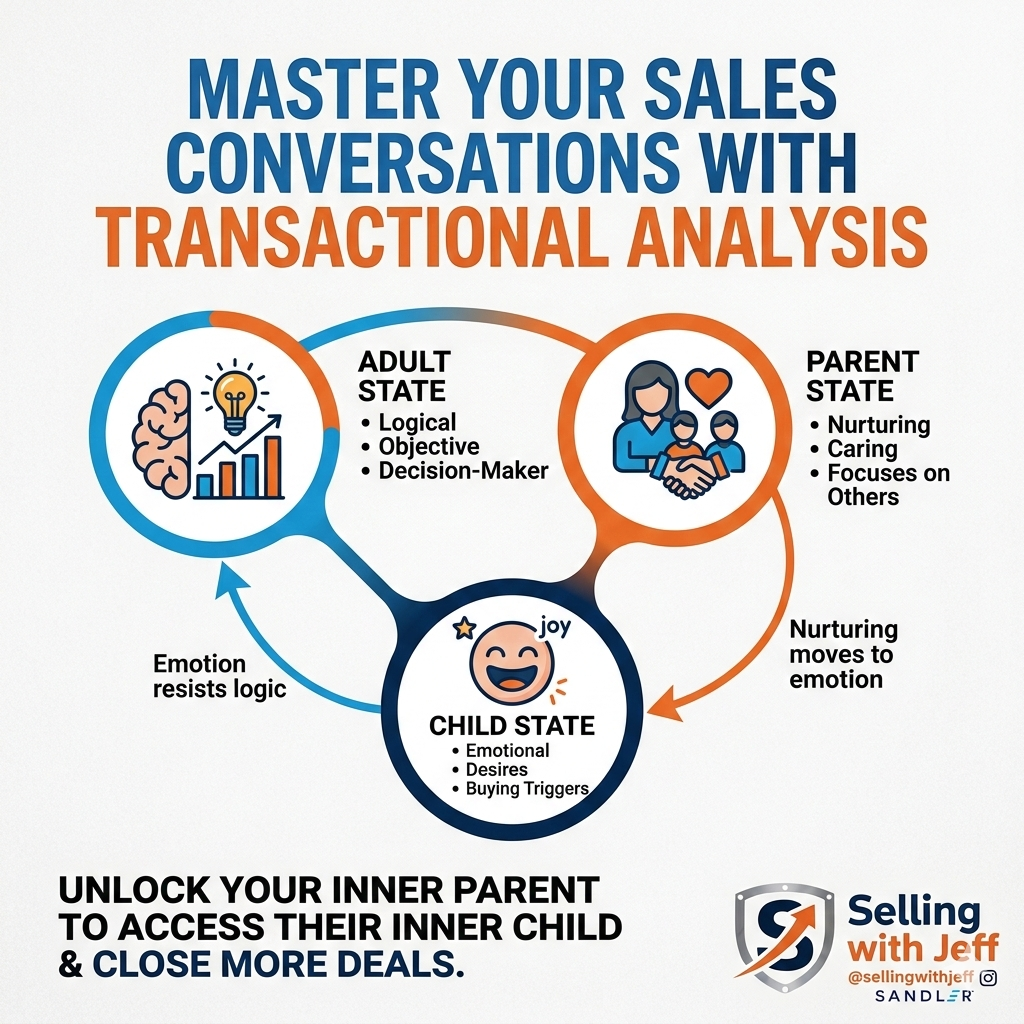
Transactional analysis is a powerful tool that can transform your sales approach, making it more effective and intuitive. At its core, transactional analysis identifies three states that individuals can inhabit during interactions: the Adult, the Parent, and the Child.
- Adult State: This is the logical, functional state where decisions are made based on rational thought and objective analysis.
- Parent State: This nurturing state is selfless, focusing on the well-being and needs of others, much like a parent caring for their child.
- Child State: This emotional state encompasses the desires, fears, and feelings of the individual, driving impulsive and emotionally charged decisions.
Understanding these states allows you to better navigate your interactions, ensuring that you remain in the most effective state for any given situation.
Controlling Your State for Successful Sales Interactions
Mastering the ability to control your state is crucial for successful sales interactions. When you manage your state, you can influence the state of your prospects, steering the conversation towards a more productive outcome.
For instance, by staying in the nurturing Parent state, you encourage your prospect to enter the Child state, where emotional decisions are made, and buying behaviors are triggered. Conversely, if you find yourself slipping into the Child state, driven by your own needs and emotions, you risk pushing your prospect into the logical Adult state, where they are less likely to make a purchase.
Practicing self-awareness and consistently evaluating your state during interactions can help maintain control and drive the conversation towards your desired outcomes.
Identifying and Responding to Client States
Successful sales interactions also depend on your ability to identify and respond to the state of your client. Observing whether your client is in the Adult, Parent, or Child state allows you to tailor your approach accordingly.
- Adult State: Engage with logical reasoning and objective facts.
- Parent State: Appeal to their nurturing side by emphasizing the benefits to others, such as their team or family.
- Child State: Focus on the emotional benefits and desires, addressing their pain points and aspirations.
By accurately identifying your client's state, you can adapt your communication style to resonate more deeply, fostering a stronger connection and increasing the likelihood of a successful sale.
Implementing Transactional Analysis in Sales Strategies
Integrating transactional analysis into your sales strategies involves consistent practice and reflection. Begin by incorporating the following steps:
- Self-Evaluation: Regularly assess your own state before and during sales interactions.
- Client Observation: Pay close attention to verbal and non-verbal cues to determine your client’s state.
- State Management: Practice techniques to maintain or shift into the appropriate state for the situation.
- Strategy Adaptation: Tailor your sales approach based on the identified state of your client, using methods that align with their current mindset.
By embedding these practices into your sales routine, you can create more meaningful connections, better understand your clients' needs, and ultimately close more deals. Transactional analysis offers a scientifically backed framework to enhance your sales effectiveness, making it an invaluable tool for any sales professional.
Unlock the potential of transactional analysis and watch your sales interactions transform for the better.