Selling with Jeff

Posts about:

Upfront Contracts (2)

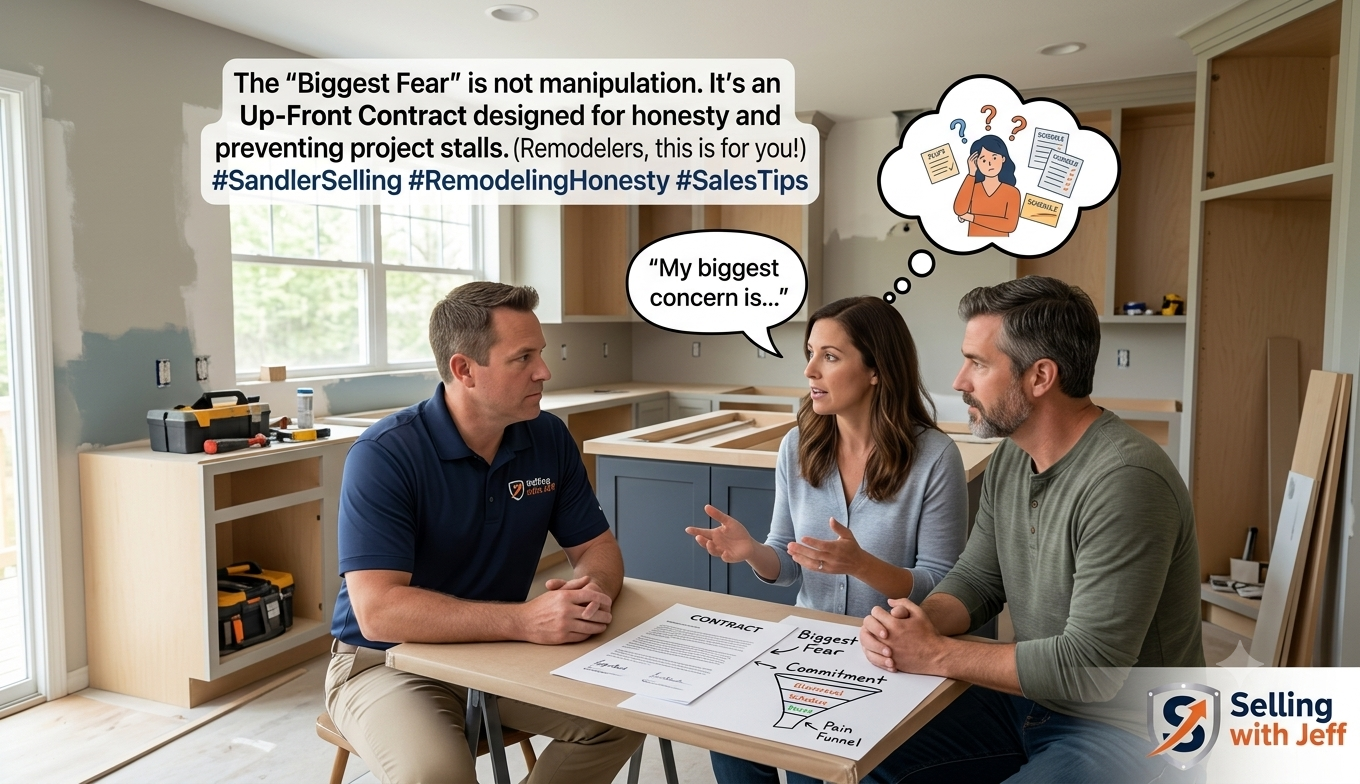
Use Biggest Fear to Strengthen Your Up-Front Contract

What “biggest fear” really is in Sandler—and why it isn’t manipulation

Biggest fear in the Sandler system is a short, disarming statement you add to your up-front contract to name the specific problem you’re worried will derail the project, and then ask the buyer to help you prevent it. Used well, it protects their schedule, your time, and the truth in the conversation.

Read More

Use DISC to Adapt Your Upfront Contracts

Why DISC matters before you set an upfront contract

Using the DISC model in sales means adapting your upfront contract so each buyer feels understood, safe, and in control of the process. When homeowners feel you "get" them, they drop their guard faster, share real concerns about budget and timing, and make clearer yes/no decisions instead of defaulting to polite "think‑it‑over" stalls.

Read More

Fix Sales Meetings with Upfront Contracts

Why your sales meetings go sideways without an upfront contract

A Sandler upfront contract is a short, explicit agreement at the start of a meeting about time, agenda, outcomes, and next steps. Done well in 40–60 words, it prevents surprises, keeps both sides aligned, and makes it much easier to uncover real business pain instead of jumping straight to pricing.

Read More

Practice PALO Until It’s Automatic

Why PALO Practice Changes Every Remodeling Sales Call

A PALO upfront contract is a short, clear agreement at the start of a meeting that sets the Purpose, Agenda, Logistics, and Outcome. In 40–60 seconds, it aligns expectations, reduces surprises, and prevents free consulting so both you and the homeowner know exactly why you’re there and how the call will end.

Read More