Remodeling Close Rate: Fix Process, Not Just Price

What a healthy remodeling close rate really looks like
A remodeling close rate on sales-qualified leads in the 25–35% range is typically healthy. Industry benchmarks show many B2B teams average about 20%, with stronger service firms in the 30–40% band. If you’re consistently above 50%, you may be under-quoting, over-filtering, or not putting enough proposals into the market to grow.
For remodelers and custom builders, the first step is defining the denominator. Don’t lump raw inquiries and unqualified tire-kickers into your close rate. Track wins against clear sales-qualified leads: projects that fit your scope, budget range, geography, and decision timeline. When you compare your number to that cleaner benchmark, a 30–35% rate usually indicates a solid process, not a crisis.
It also helps to separate stages. Many design–build firms sign design agreements with 70–80% of qualified prospects, but only convert 50–60% of those designs into construction contracts. Others are the opposite: modest design conversion but strong construction conversion once a proposal is out. Without this basic math, it’s easy to panic when your headline percentage drops from 50% to 33%, even though your jobs are larger, margins are higher, and your estimator is finally catching real costs.
Why “we lost on price” hides the real sales problem
When a prospect says your number is high, it’s tempting to assume price is the problem. Yet win–loss research cited by B2B Sales Training found that CRM loss reasons are wrong about 85% of the time. Blaming price lets the team off the hook instead of examining the sales call.
The reality is that buyers rarely choose solely on price, especially for six‑figure remodels. They pay for trust, risk reduction, and convenience. If a homeowner believes you understand their family, their constraints, and the hidden risks in their project, a 5–10% price gap is often acceptable. If they don’t, even the lowest bid can feel unsafe.
A better mental model is: “I didn’t build enough value” or “I didn’t uncover enough pain.” That shifts the focus back to controllable behaviors: Did you reach third-level pain about their current home? Did you explain your process in plain language? Did you clarify how you protect them from change orders and delays? When you replace “they were cheap” with “here’s what I missed,” your close rate becomes coachable.
Run simple win–loss postmortems to improve close rate
Instead of guessing why deals close or die, ask. Structured win–loss programs have been shown to improve close rates by 15–30%, with some studies reporting up to 50% relative gains when teams act on the insights, according to win–loss analysis research. You don’t need a consultant to start; you need a simple script and discipline.
Within a week of every big decision, schedule a 15‑minute call with the homeowner or architect. If you won, ask what tipped the scale: your process, communication, references, or something else. If you lost, preface the conversation with, “You can’t hurt my feelings—help me get better for the next family.” Then ask what they saw as your strengths, what made them hesitate, and what the winner did differently.
Document their words in a shared log: not your interpretation, their phrases. Over a quarter or two, patterns emerge: unclear budgets, weak follow‑through, confusing proposals, or slow responses. Pair that data with external benchmarks—like the ~20% average B2B close rate reported in HubSpot studies summarized by Alex Berman—and you’ll know whether to improve skills, adjust positioning, or tweak qualification.
Go back to basics: trust, upfront contracts, and no
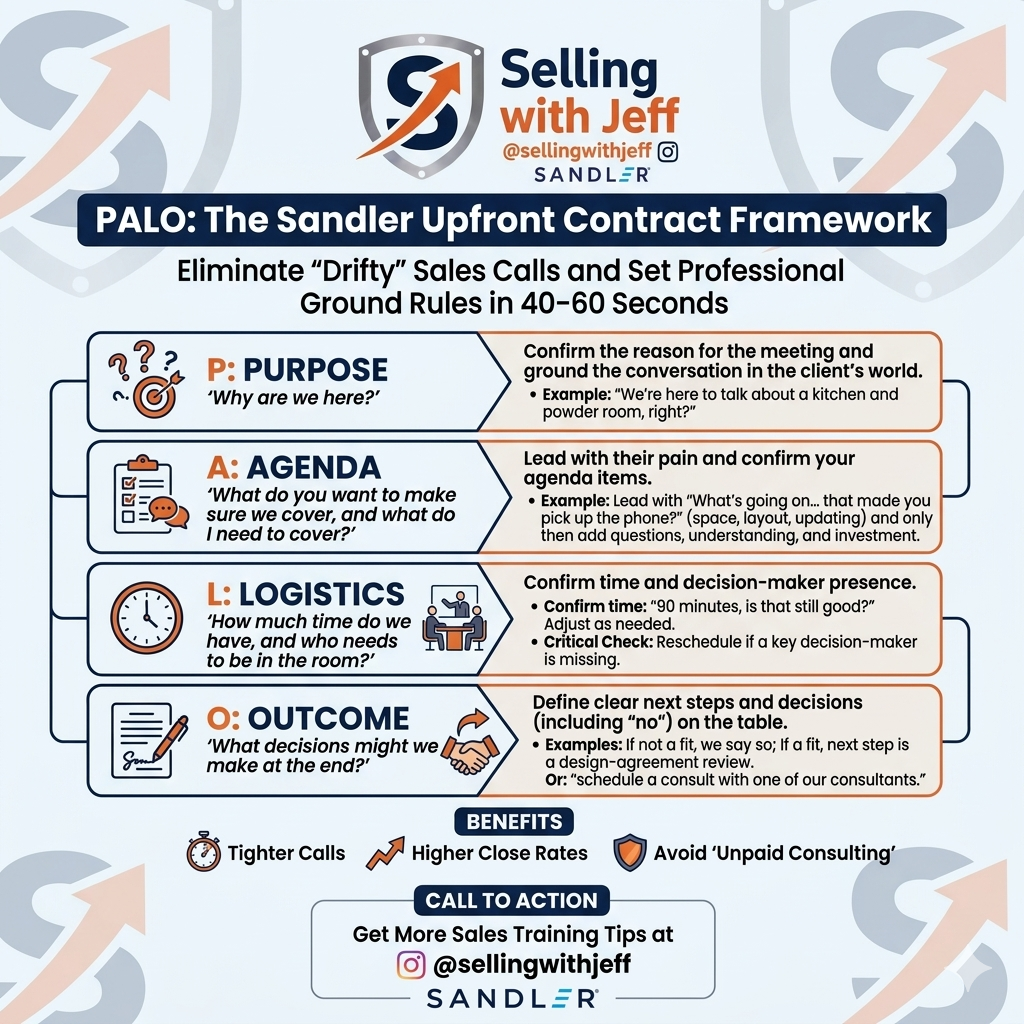
Close rate is an output; the inputs are fundamentals like trust and clear next steps. Many remodelers use a framework similar to PALO (Purpose, Agenda, Logistics, Outcome) to open meetings. Done well, it resets expectations: why you’re there, what they want to cover, what you need to cover, how long you have, and what decisions—yes or no—are on the table at the end.
Trust starts with basic behaviors: showing up prepared, asking about everyone involved in the decision, and listening more than you talk. It deepens when you’re willing to say, “We might not be the right fit,” and mean it. Telling a prospect they can say no—and that you might also say no—creates equal business stature and reduces the pressure that leads to stalls.
Price conversations also feel different when your process is strong. For example, when a homeowner asks, “Can you do any better?” instead of jumping to a discount, pause, and respond with something as simple as, “I wish I could,” and stay quiet. Often they reveal the real concern: fear of going over budget, a bad past experience, or pressure from another decision-maker. That gives you a chance to solve the real problem, improve the experience, and, over time, raise your close rate without racing to the bottom on price.