
Re-Engage Ghosted Remodeling Leads with Confidence
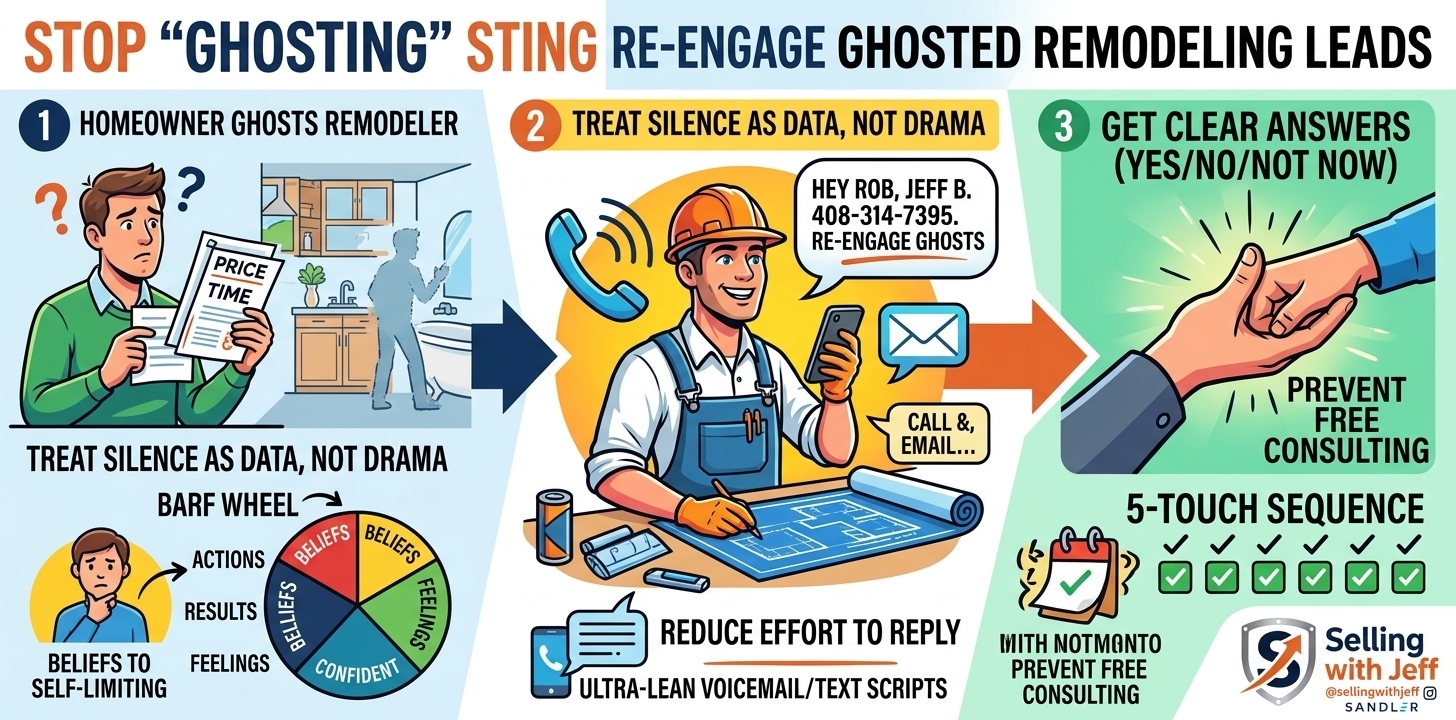
If you sell remodeling projects, nothing stings like a homeowner who loved your ideas and then disappeared. This guide shows you how to re-engage ghosted leads, protect your mindset when they go silent, and turn follow-up into a simple habit instead of an emotional roller coaster.
Why remodeling prospects ghost you after a great meeting
Effective re‑engaging ghosted leads means treating silence as data, not drama. When a warm prospect goes quiet, assume they’re busy, confused, or already got what they wanted from your free consulting. Your job is to reduce the effort to reply and give them a clear, easy next step.
In remodeling, most buyers want three things from that first meeting: “What will it cost?”, “How long will it take?”, and “When can you start?” Too many salespeople answer those questions, then walk out without a clear next appointment. The prospect got the information they wanted, and there’s no reason for them to proactively call you back.
Email makes the problem worse. It’s effortless to ignore a “Just checking in” message. According to research summarized by Martal Group benchmarks, 42% of replies in outbound campaigns come from follow-up messages, yet 48% of reps never send a second one. Ghosting is often the predictable result of a weak process, not a personal rejection.
Short, simple follow-ups that revive “dead” remodeling leads
When a lead has gone quiet, shorter is almost always better. They already know who you are and why you’re calling; repeating the whole story just gives them more words to ignore. Use ultra-lean scripts that make it effortless to respond.
For voicemail, skip the pitch: “Hey Rob, Jeff Borowitz. You can reach me at 408‑314‑7395, 408‑314‑7395.” Then hang up. They recognize your name, they know it’s about their project, and the call takes them seconds to process instead of a minute-long recap they’ll delete.
Text and email can be almost identical. One powerful line is: “Hey Rob, are you still interested in remodeling your house?” That’s it. No paragraph about how great your meeting was. They can answer yes, no, or “not now” in a few thumb taps.
If you’ve tried a couple of short touches, send a light‑hearted breakup email: “Usually it’s one of three reasons: 1) you went a different direction, 2) you want to move ahead but you’re slammed, or 3) you want to move ahead but you’re trapped under something heavy and can’t reach your phone. If it’s 1 or 2, tell me and I’ll take the right action. If it’s 3, tell me and I’ll send help.” Remodelers using this style often see response rates north of 80%, because the only goal is a clear answer.
Use the BARF wheel to stop self-limiting sales beliefs
Ghosting doesn’t just hurt your pipeline; it hits your confidence. That’s where the BARF wheel—Beliefs, Actions, Results, Feelings—comes in. Your belief about yourself and your deals drives the actions you take, which drive results, which then reinforce how you feel and what you believe next time.
Imagine a salesperson thinking, “I’m just not good at follow-up.” That belief leads to weak actions—one timid email and then giving up. The results are predictable: few replies, fewer signed projects. Those poor results create feelings of frustration and embarrassment, which reinforce the original belief that they’re bad at sales.
Instead, start the wheel with the feeling you want: “I want to feel confident because I consistently get clear answers from prospects.” Work backward: what results create that feeling? For example, “Most of my open deals either book a next step or tell me ‘no’ within 10 business days.” Then define the actions: always set the next appointment before leaving; if ghosted, use two short touches and one humorous breakup email.
Finally, update the belief: “I can control my behaviors, and when I follow this process, I usually get a clear answer.” Every time you run the play, you strengthen that belief instead of the old self-limiting one.
Turn re-engagement into a consistent, repeatable sales habit
The goal isn’t to “win back every ghosted lead.” The real win is a repeatable system that prevents most ghosting and quickly clarifies the rest. That starts in the appointment itself: before you leave (or hang up), schedule the next conversation. This one habit alone can eliminate the majority of ghosting.
When a prospect still goes quiet, switch to your standard sequence: short voicemail, short text or email, then the humorous breakup email. Research from ZoomInfo shows that about 80% of sales require at least five follow-up touches, yet nearly half of reps quit after one or two. Sticking to your sequence automatically puts you in the top tier of persistence.
Make it measurable. Track how many ghosted deals get a clear yes, no, or “not now” after your sequence. Celebrate the clarity, not just the yeses. Over time, you’ll see that consistent behaviors—setting next meetings, sending short follow-ups, and running the BARF wheel on yourself—turn ghosting from a personal sting into just another data point in a healthy remodeling sales process.