
Creating A Vision Board To Achieve Your Goals For 2026
Creating A Vision Board To Achieve Your Goals For 2026
Why Vision Boards Drive Goal Achievement in Sales and Leadership
Vision boards have long been a staple in personal development, but their impact in sales and leadership is profound and evidence-based. For sales professionals and leaders, the act of visualizing success isn’t just motivational—it’s a strategic lever that turns abstract goals into tangible outcomes. By creating a clear, visual representation of their aspirations, sales teams anchor their daily behaviors to long-term objectives, increasing their ability to stay focused and resilient in the face of setbacks.
Research in neuroscience and performance psychology backs this up: when you see and emotionally connect with your goals, you’re more likely to take intentional action toward them. For leaders, vision boards provide a powerful tool to align their team’s mindset around a shared destination, fostering both individual accountability and collective drive.
Designing a Vision Board That Aligns With Your 2026 Sales Objectives
A vision board is only as effective as the clarity and relevance of the goals it represents. For sales leaders planning for 2026, the process starts by translating organizational objectives into personal, team, and departmental targets. Begin by identifying your highest-priority sales goals—whether it’s accelerating pipeline velocity, increasing win rates, or expanding into new markets—and then break these down into the drivers and behaviors that will get you there.
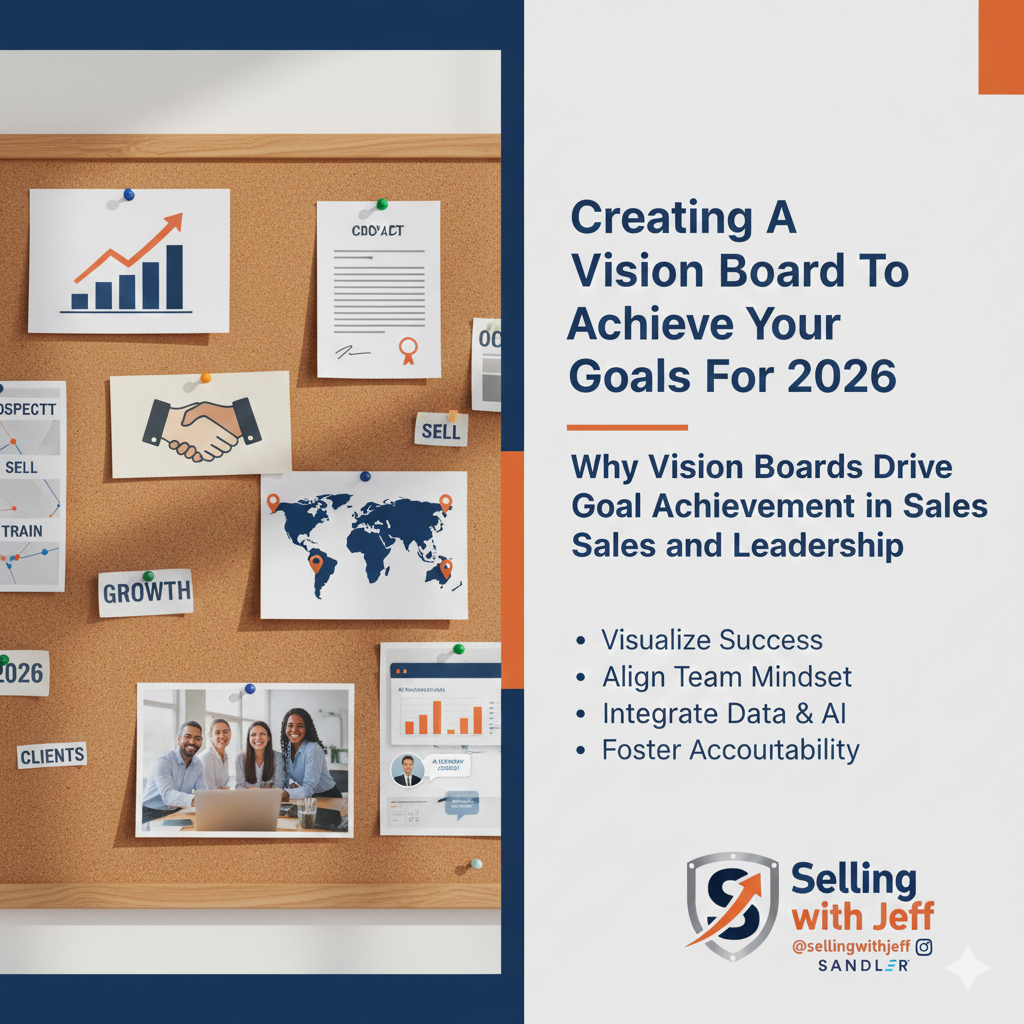
Modern vision boards go far beyond magazine clippings. Leverage digital tools like PowerPoint or collaborative online platforms to create dynamic, shareable boards that include key words (e.g., "prospect, sell, train"), images that represent your targets (like a closed contract or a growing pipeline graph), and even customer logos or testimonials. The goal is to make your vision board a living artifact that inspires action and keeps your team connected to both the 'why' and the 'how' of your 2026 objectives.
Integrating Data-Driven Insights and AI Tools Into Your Visualization Process
In today’s data-rich environment, the most effective sales vision boards integrate not only aspirations but also actionable insights. Incorporate key metrics—such as conversion ratios, client acquisition goals, or activity benchmarks—directly onto your board to keep success measurable and top-of-mind. Tools like Sandler’s AI Roleplay Coach, CRM-embedded guidance, and call intelligence platforms can provide real-time feedback that helps you adjust your vision and tactics dynamically.
AI-powered reinforcement tools enable sales professionals to visualize not just end goals, but the incremental progress and skill development needed along the way. By including AI-driven analytics, dashboards, and milestone trackers on your vision board, you and your team can see both the big picture and the steps required to get there, reinforcing a data-driven, growth-oriented culture.
Fostering Team Engagement and Accountability Through Shared Vision Boards
Sales is a team sport, and the power of a vision board multiplies when goals are shared and celebrated collectively. Hosting vision board workshops—whether in-person or virtually—encourages team members to clarify their individual and group objectives, fostering psychological safety and open communication. As each person shares their board, the team builds a sense of mutual accountability and support, which is critical for navigating the inevitable challenges of enterprise sales.
Encourage your team to place their vision boards somewhere visible, both individually and in shared digital spaces. Regularly revisiting these boards in meetings or coaching sessions keeps goals front-and-center and makes it easier to course-correct as a group. Over time, this practice not only boosts engagement but also reinforces the behaviors and mindsets that drive consistent sales performance.
Turning Your Vision Board Into Measurable Outcomes and Lasting Success
A vision board is the starting point, not the finish line. To transform your visual aspirations into real-world achievements, tie each element of your board to specific, measurable actions. Commit to one behavior or activity per week that aligns with your vision—whether it’s increasing your outreach, refining your qualification process, or investing in your team’s skill development.
Celebrate milestones along the way and use setbacks as learning opportunities. As you achieve the goals on your vision board, update it to reflect new ambitions and keep your momentum high. By combining visualization with strategic execution and accountability, sales leaders and teams can not only predict their future—they can create it, achieving lasting success well into 2026 and beyond.