AI Prompts for Sales: The IMPACT Framework
Salespeople are flocking to ChatGPT and Claude, but many end up frustrated. They paste in a vague request, get a generic answer, then spend 20 minutes rewriting. This post distills Jack Borovets’ IMPACT prompting approach from a recent Sandler session into a simple playbook so you can get sales-ready output in one or two prompts instead of ten.
Turn AI Into a Real Sales Assistant
AI prompts for sales work best when they start with a clear, measurable outcome. Tell the model exactly what you want, for whom, and why it matters. That way, the AI can structure its answer around your sales process instead of guessing and giving you a generic blog-style response.
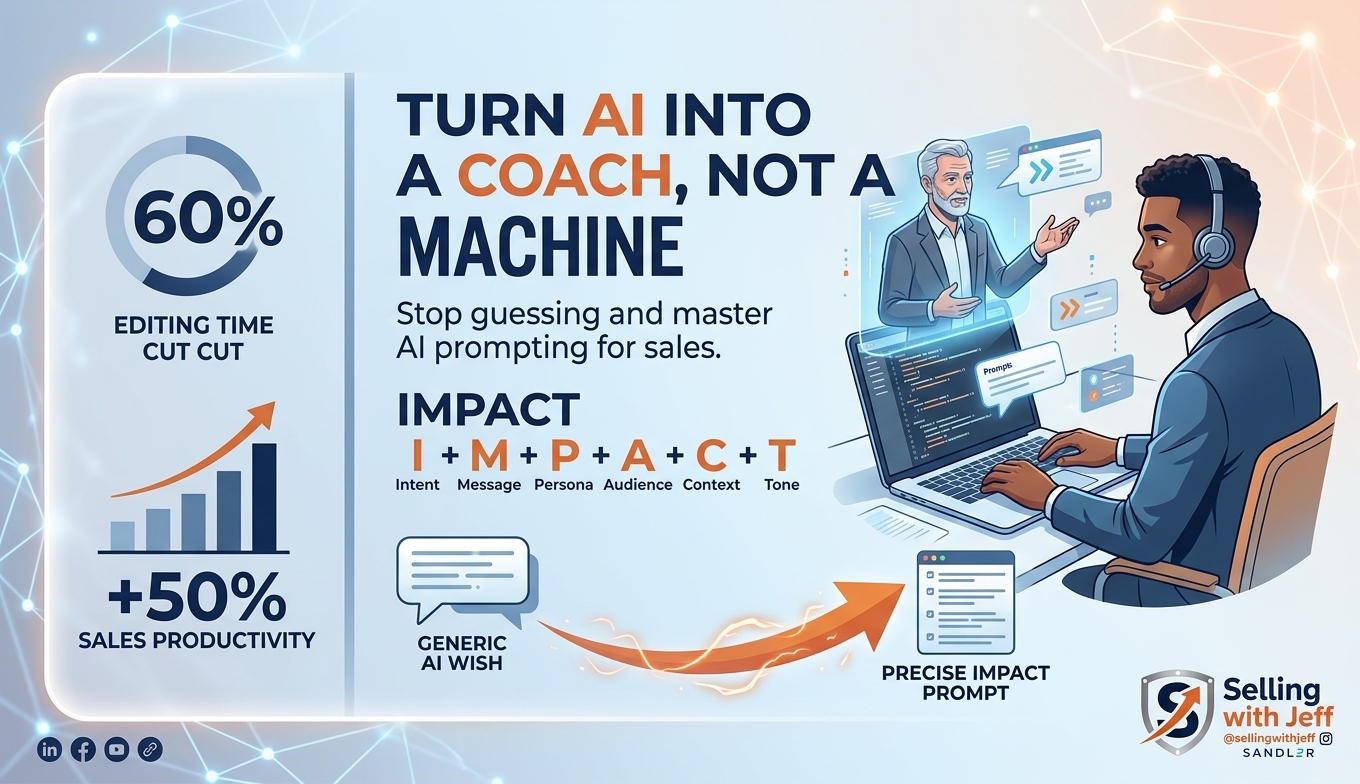
In IMPACT, your Intent is the outcome: "Create a 120-word follow-up email that requalifies the deal and confirms next steps" is far stronger than "Write a follow-up email." The more concrete the finish line, the easier it is for AI to hit it on the first try.
Research from AiSDR shows most failed prompts suffer from lack of clarity and structure, not model quality. Large companies are on track for AI to generate 30% of their outgoing marketing messages, yet the ones seeing real lift are the teams that treat prompts like detailed instructions, not wishes.
Use Message and Persona to Get Coaching, Not Just Content
Message is how the AI should work with you during the task. Do you want it to ask questions, push back, or just execute? If you don’t say, it will obediently agree with everything and reinforce weak ideas.
For example, a sales rep might write: "Challenge my assumptions. If my idea for a prospecting email is weak or generic, say so directly and suggest a stronger angle." That one sentence turns the AI from a polite copy machine into a coach that helps you think.
Persona is who you are. Telling the model "I am a Sandler-trained account executive selling design-build projects to time-poor homeowners" radically sharpens its recommendations. In one internal review shared on BestPrompt, teams that baked clear persona details into their prompts cut editing time by about 60%.
Aim at a Real Buyer: Audience and Context
Audience is who the final output is for. A coaching recap for a junior SDR needs different language than a proposal summary for a CFO. When you tell AI exactly who will read the output, it adjusts depth, jargon, and examples so the piece actually lands.
Context tells the AI what role it is playing. "You are a senior Sandler methodology consultant and sales coach" points it toward questioning, qualification, and behavior change, not fluffy motivation. Pair that with a short description of your prospect’s world, and you get sharper examples and objections.
According to an overview on AI Wiki, structured prompts that define role and context can improve sales productivity by up to 50%. For a rep making 30 calls a day, that can mean several extra tailored emails or call plans without adding hours.
Lock It In: Tone, Templates, and Next Steps
Tone is about how the answer should sound and look. Do you want bullet points or a short narrative? Formal or conversational? Telling the AI to "sound like a Sandler coach: direct, adult-to-adult, and focused on behavior, not hype" keeps your output aligned with how you actually sell.
Jack’s most powerful move was turning IMPACT into reusable templates. For example, you might keep one master prompt for discovery call prep, another for proposal review, and a third for post-meeting summaries. Each includes your Intent, Persona, Audience, Context, and Tone so you aren’t reinventing the wheel every time.
A 2026 review on BestPrompt found 83% of AI-adopting sales teams saw revenue growth, and the best teams cut cost per meeting almost in half by standardizing prompt frameworks. Start small: pick one recurring task this week, write a simple IMPACT prompt for it, and refine after each use.