Sales Postmortems: How to Learn From Every Lost Deal
Start with a real conversation, not another email
A sales postmortem is a short, structured review you run after you lose a deal to understand what really happened and how to improve next time. It starts by talking directly to the buyer, not guessing in your CRM or hiding behind one more “Sorry we missed you – any feedback?” email.
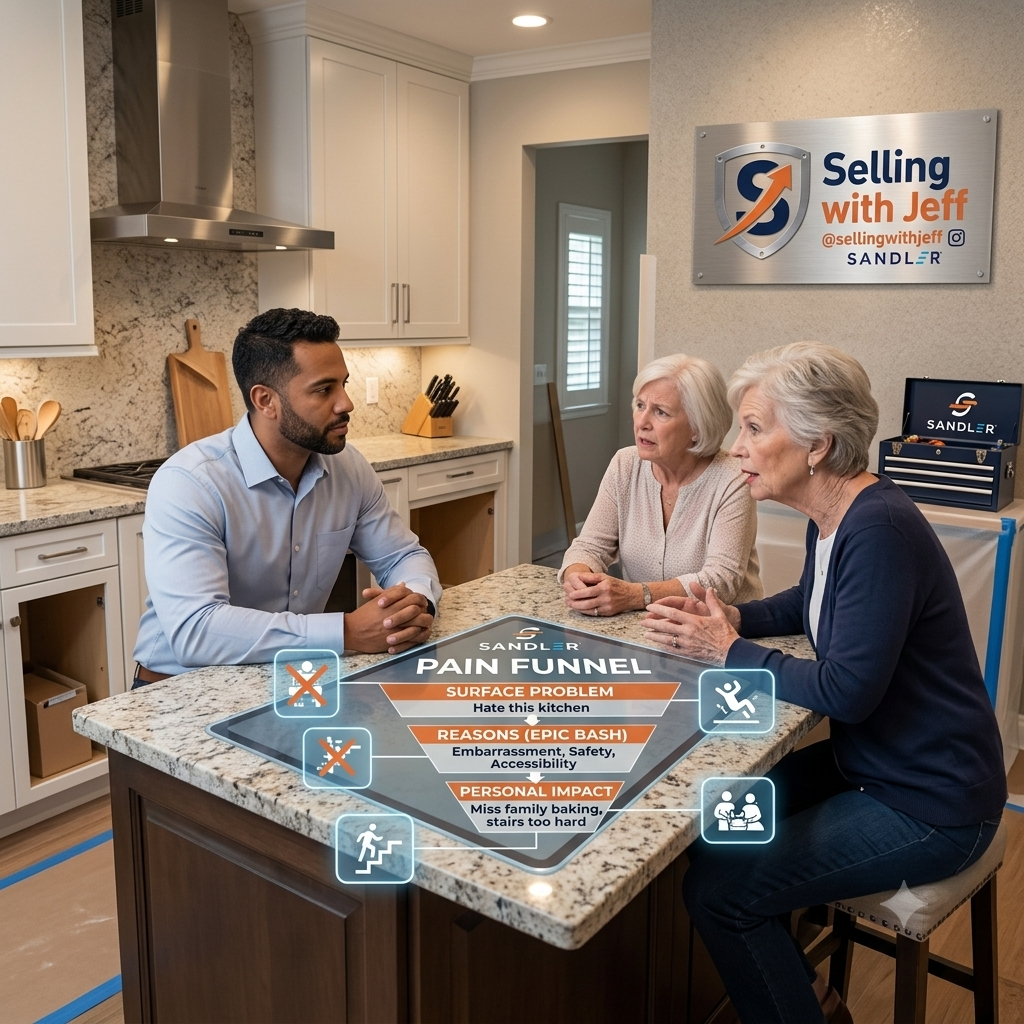
In the remodeler training conversation above, the salesperson did what most reps do: sent a polite email asking, “Could you share what about our process didn’t work for you?” The prospect replied with a vague, “You were great, we just went with someone else,” and then went quiet. That’s predictable. When you make the question about your company, people default to safe, surface-level answers.
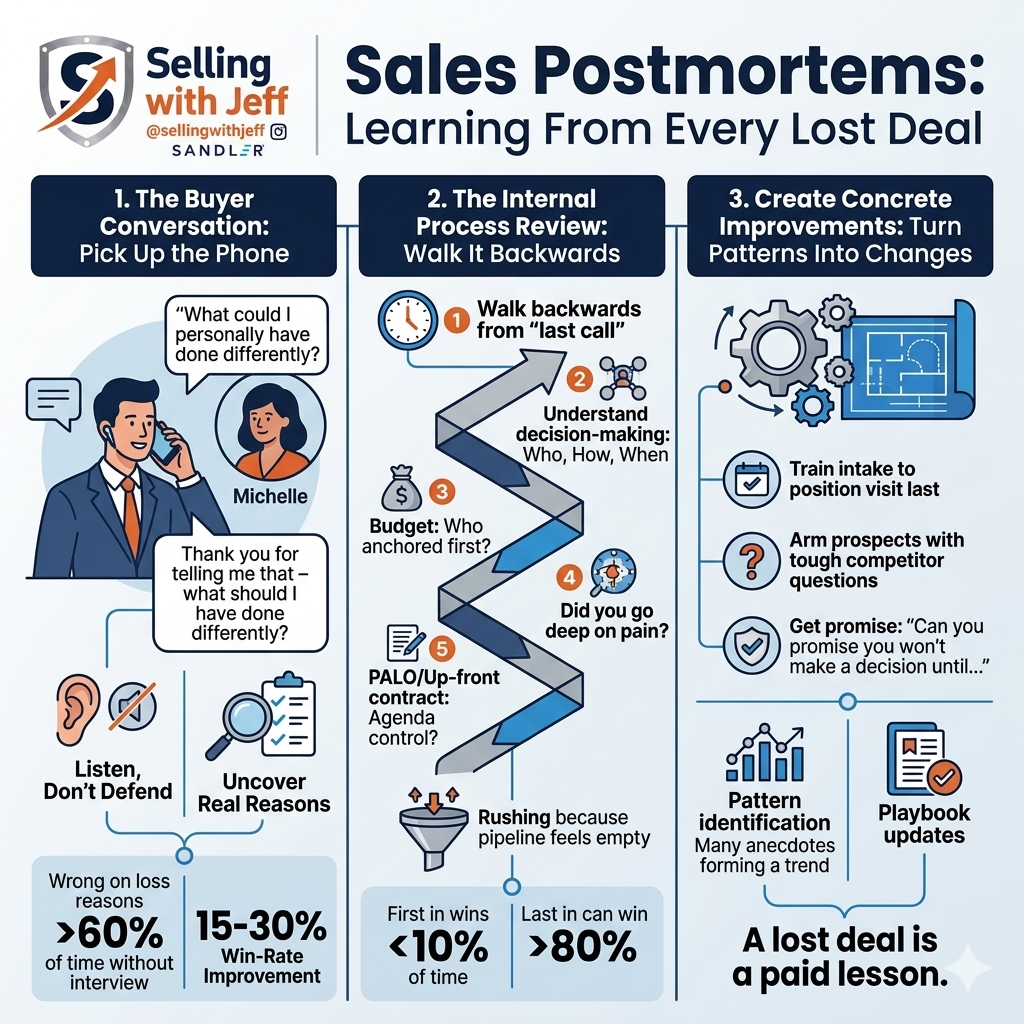
Instead, pick up the phone. Lead with something like, “Hey Michelle, I completely respect that you chose another contractor, and thank you for letting me know. Now that it’s over, what could I personally have done differently that might have changed the outcome? I’m trying not to make the same mistakes over and over again.” When you make it about you as a human being – and you sincerely ask for help – most clients are surprisingly willing to share.
Industry research backs this up. Teams that run structured buyer interviews after deals close see win-rate improvements of 15–30% because they uncover reasons they never see in their CRM. One study comparing buyer interviews to CRM notes found that reps were wrong about why they lost more than 60% of the time. The lesson: you can’t fix what you won’t honestly look at, and you can’t honestly look at it without the buyer’s voice.
When you do get them on the phone, your job is to listen, not defend. Even when the explanation feels off or unfair, respond with “Thank you for telling me that – what should I have done differently?” The moment you argue (“That’s not what happened” or “We do offer that”), the conversation is over. Take good notes, keep it to 5–10 minutes, and get off the call.
Review your sales process step by step after every loss
A lost-deal postmortem isn’t just a buyer call; it’s a disciplined review of every step from first contact to “we’ve chosen someone else.” After you hang up, sit down with the opportunity and ask: Did we actually follow our process, or did we break it because we were hungry for work?
In the “Michelle” example, the team skipped several key steps. First, they never asked, “Who else are you speaking with?” So they had no idea if they were being compared to other design–build firms (apples to apples) or to a low-overhead “Chuck in a Truck” (apples to discount oranges). That matters, because how you educate the homeowner, and what questions you give them to ask other contractors, should change based on the competitive landscape.
Second, they rushed to be first in because the pipeline felt like “the Sahara Desert.” The coach pointed out what most data shows: when homeowners or buying committees meet three or more providers, the first one in wins less than 10% of the time. The last one to present usually wins “more than half” of the deals, and some teams that deliberately aim to be last report win rates above 80% on those opportunities. Scarcity and sequence shape perception.
A practical way to run this review is to walk the call “backwards”:
- How did the last call end? Was there a clear next step and did you “post-sell” it (e.g., “Can you promise me you won’t decide until we talk on Thursday?”)?
- Did you fully understand decision-making: who was involved, how they’d choose, and when?
- Who said the first number on budget – you or them? Did you anchor or did they?
- Did you go deep enough on pain, or bail out when it got uncomfortable?
- Did your PALO/up-front contract set an agenda that favored meaningful business issues, or did you drift into generic “time, price, and process” talk?
This kind of disciplined review might feel tedious, but it’s where real learning happens. One guide on lost-deal analysis calls this “moving from CRM fiction to reality”: your notes and dropdown fields typically capture only 15–20% of what actually drove the decision. A structured step-by-step review fills in the missing 80%.
Turn patterns from lost deals into concrete sales improvements
The final step in a sales postmortem process is turning insights into changes: to your conversations, your qualification criteria, and sometimes your entire sales playbook. This is where you swallow your ego and ask, “Given what we’ve learned, what do we need to do differently – me personally, and us as a company?”
Start with patterns. One loss is an anecdote; five similar losses are a trend. If you consistently discover that you were first in and rushed your discovery because the calendar looked empty, you have a process issue, not just a “bad luck” issue. If you keep finding out that prospects compared your design–build experience to bare-bones bid/build outfits, you have a positioning issue. If buyers keep saying they “felt more comfortable” with the competitor, you may have a trust and clarity issue in your early calls.
The coach in the transcript gave several concrete adjustments:
- Train your intake team to ask, “Where are you in the process with other firms?” Then quietly position your visit to be last, even if that means scheduling two weeks out.
- When you learn they’re meeting other contractors, offer 2–3 specific questions they should ask everyone, chosen around your strengths (e.g., warranty process, percentage of on-time/on-budget projects, repeat-client rate). Prospects will almost always turn around and ask, “And how would you answer those?”
- On the follow-up meeting, “post-sell” the next step by asking for a promise: “Can you promise you won’t make a final decision until we’ve had a chance to review everything together?” If they won’t commit, that’s an early warning.
Outside remodeling, high-performing B2B sales teams build a simple playbook: every closed-lost deal above a certain size triggers a 15-minute buyer call, a call recording review, and a shared summary of “3 things we’d do differently next time.” Over a quarter or two, these small course corrections compound into a higher win rate, stronger competitive positioning, and fewer surprises.
The most important mindset shift is this: a lost deal isn’t just a loss; it’s a paid lesson. You’ve already invested time, energy, and expertise. Running a disciplined postmortem is how you actually collect the tuition and turn that loss into better questions, better process, and ultimately more signed business at higher margins.