DiSC Sales Playbook: Read Buyers and Adjust Fast

What DiSC really changes in a sales conversation
DiSC sales communication means using behavioral styles (Dominance, Influence, Steadiness, Conscientiousness) to decide how you open, question, and close in real time. When you match how buyers like to communicate, they relax faster, tell you the truth sooner, and you stop wasting hours on people who were never going to buy.
If you’ve sat through a DiSC workshop, you already know the letters. Your real pain is this: in an actual sales call, with a real quota hanging over you, it all disappears. You default to your own style. That’s how decisive buyers feel buried in detail, easygoing buyers feel bulldozed, and your proposals turn into unpaid consulting. Research from Sandler teams that deliberately flexed to buyer styles showed win rates improving 15–20% over two quarters compared to teams that didn’t adapt, because they qualified faster and protected their calendar.
The point is not to become a pop psychologist. The point is to use DiSC as a simple, field-ready filter: task or people focus, fast or measured pace. From there, you adjust three things: how quickly you get down to business, how much detail you share, and how you handle conflict. That structure protects margin the same way an Upfront Contract does—by preventing you from slipping back into “winging it” just because you like the prospect.
Spotting DiSC styles fast in real buyer meetings
You do not have 40 minutes to analyze personality. You have about 40 seconds. Start by watching two things: does this person light up more about tasks or people, and is their pace fast or measured? That two-by-two lens is enough to make a first call.
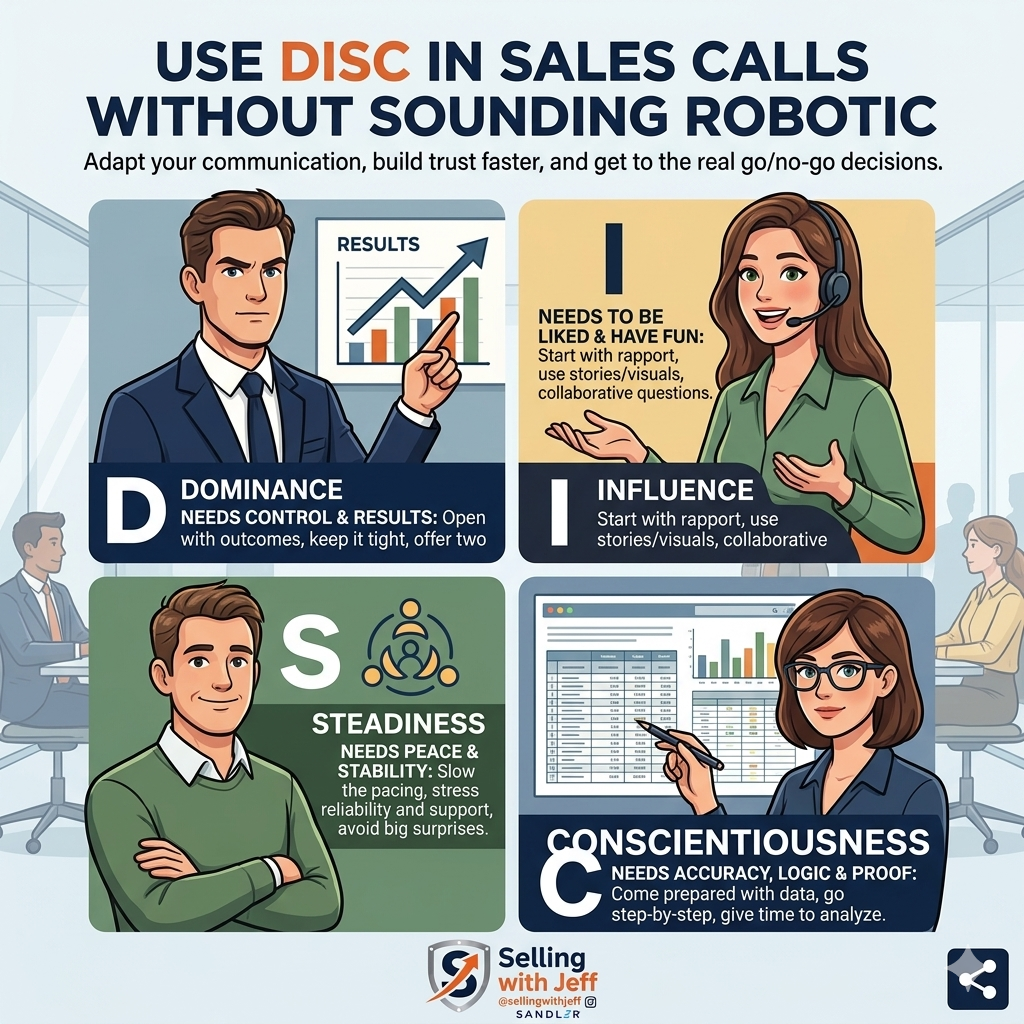
Dominant (D) buyers are task + fast. They cut small talk short, drive the agenda, and hate wasting time. Think of the banker in the story who walked into the office and opened with “How was your weekend?”—a total miss for a high-D who just wanted, “We’ve got 20 minutes, how do you want to use them?” Influence (I) buyers are people + fast: they talk with their hands, tell stories, and happily follow conversational rabbit trails.
Steady (S) buyers are people + measured. They’re pleasant, loyal, and slow to change. They’ll ask how your team is doing and mean it. Conscientious (C) buyers are task + measured: detail-heavy, process-focused, and cautious. Extended DISC and other tools describe the same patterns in different language, but the observation work is the same. In a Sandler client study cited by Jeff Borovitz, simply teaching reps to scan for these two dimensions made it easier for them to qualify and close with the right people.
Make this practical. Before every meeting, write two questions at the top of your notes: “Task or people?” and “Fast or measured?” Answer them in the first five minutes and commit to selling into their quadrant, not yours.
Adjusting your selling approach for each DiSC style
Once you’ve guessed a style, your job is to change your behavior, not theirs. That’s where most salespeople fail—they label the prospect and keep talking the same way.
With D buyers, be brief, direct, and results-focused. Open with, “We’ve got 20 minutes—what do you want to walk away with?” Offer two clear options instead of five. A Sandler team working with a high-D executive shifted from a 20-page proposal to a one-page summary with a simple A/B choice, and the deal closed in one meeting instead of three.
With I buyers, you still need structure, but you earn the right to it through connection. Allow a few minutes of genuine small talk, then say, “This has been fun—can we switch gears and talk about whether this project even makes sense?” Use stories and visuals, not spreadsheets. With S buyers, lower your pace and talk about impact on people and stability: “What would feel like too much disruption for your family during this remodel?” They buy peace of mind more than features.
C buyers want data, process, and time to think. Bring the plan, the assumptions, and the math. When one remodeler started sending a clear scope table and assumptions page ahead of C-style meetings, change orders dropped because analytical clients finally trusted the numbers.
Using DiSC when multiple decision‑makers are in the room
Real deals usually involve at least two people. That’s where DiSC discipline shows up—or disappears. If you chase only the loudest style in the room, you lose the quieter decision-maker and wonder why your “verbal yes” died in committee.
Your first job is to spot who’s who. The spouse driving the conversation, asking for timelines, and pushing for decisions is often a D or a high I. The one watching quietly, taking mental notes about budget and disruption, is usually an S or C. In the transcript scenario where the trainer joked he’d talk mostly to the homeowner’s spouse, he also made it clear: ignore the quiet partner and the project stalls.
Practically, that means you split your focus. You honor the D by moving briskly and respecting time, while deliberately inviting the S or C in: “We’ve heard a lot from Jake; Mary Beth, what concerns are you still sitting with?” Then you use Sandler Exit Gates: no proposal unless both parties have defined pain, budget, and decision process. DiSC doesn’t replace the Sandler Selling System—it sharpens it, so you stop selling the way you like to buy and start selling the way your buyers actually decide.